Índice do artigofaltam 10 min de leitura
A city joining the national standard is one check. Configuration is another. Sharing new invoices is a third, and making the history available is a fourth. They don't replace each other.
Brazil's National NFS-e System (the NFS-e is Brazil's electronic service invoice) has genuinely reduced the fragmentation of service invoicing in the country. Reduced, not eliminated. Anyone who needs the invoices a company receives, not the ones it issues, still finds a landscape where each city keeps its own rules, calendar, ancillary obligations and piece of history.
A column labeled "Brazil" only means something once the conversation goes down to the level of city and tax period.
Article summary
- The manual for the ADN taxpayer APIs has three pages and documents exactly two endpoints. It has no limits, pagination, error codes or production URL.
- The buyer can respond to a national NFS-e, with its own event and a typified rejection reason. The belief that only the NF-e has acknowledgment events is wrong.
- São Paulo has an API for received invoices and it has a 31-day cap per query, which turns a year of history into a sequence of paginated calls.
- The 2026 calendar has five dates that don't replace each other. The first two are already in force: showing IBS and CBS on the broadest group of services, since October 1, and the National Issuer for Simples companies, for tax periods from November 1.
The ADN is a sharing layer, not the issuer
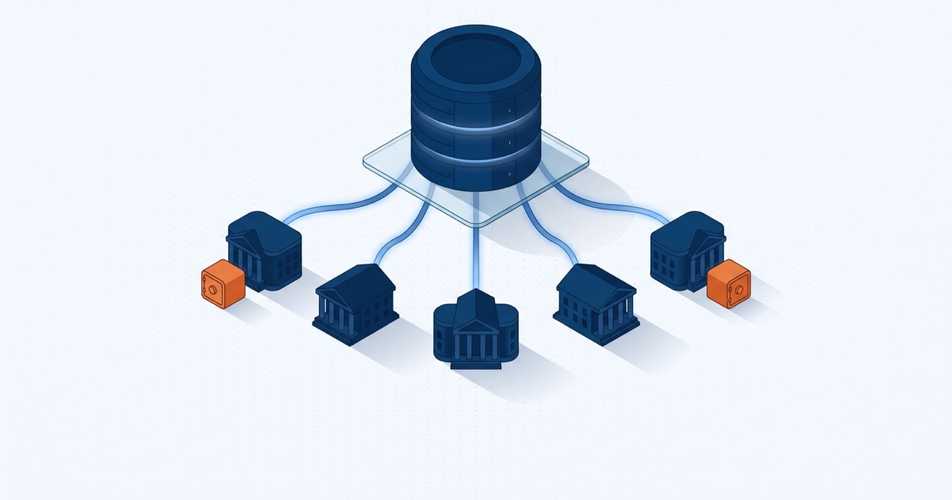
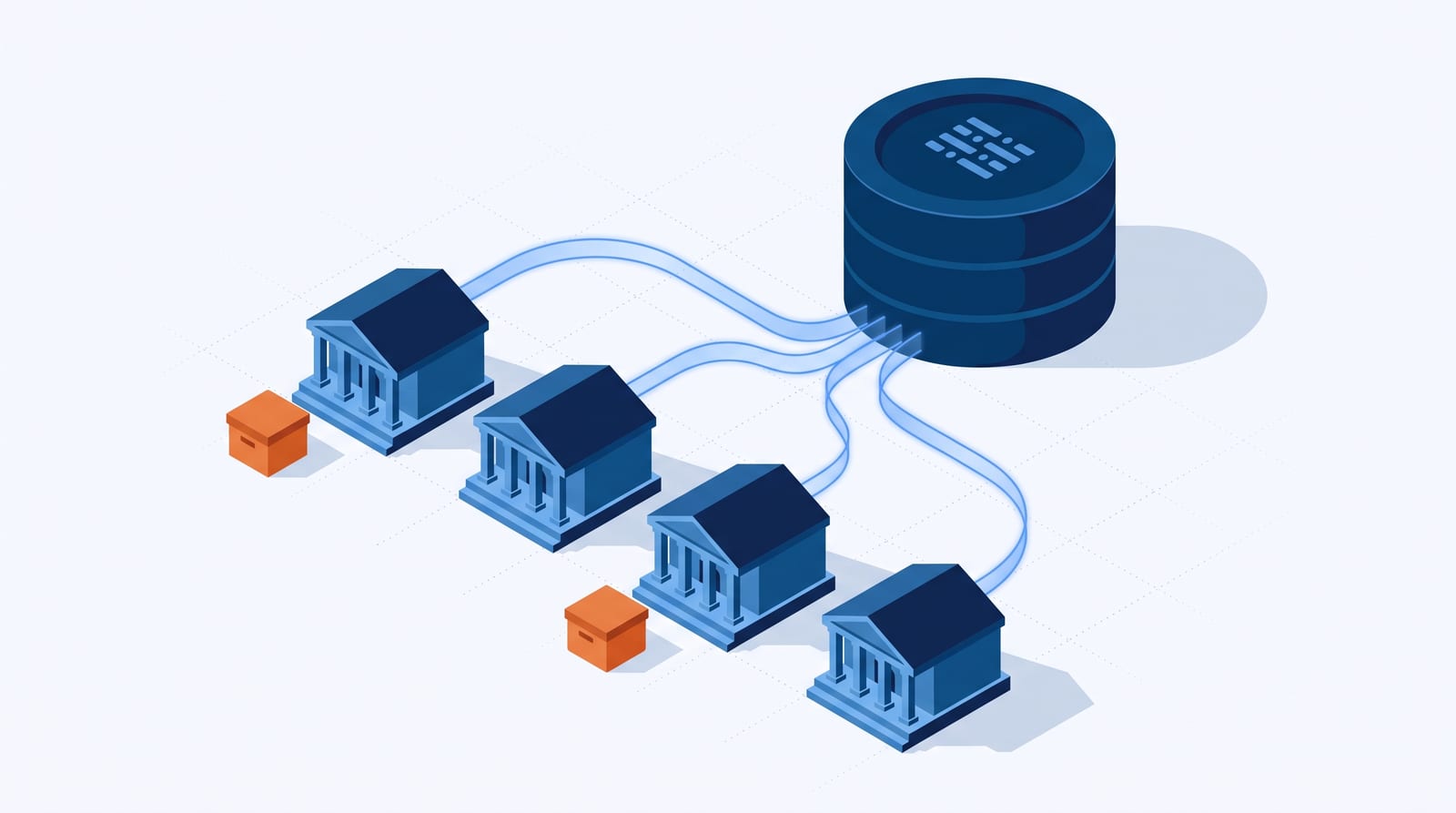
The National Data Environment, the ADN, is the layer where the document is made available for the taxpayer to query. The National Issuer is one way of producing the invoice. They're different pieces, and cities' own systems can coexist with national sharing.
The distinction seems academic and it solves an expensive mistake: a city calling its own web service "National" doesn't prove that address is the current ADN API.
The concrete risk lies in the vocabulary. A city may keep old documentation online long after it's no longer in force, and the file name doesn't tell you which of the two layers it describes.
Before treating an address as the ADN API, check the version and date of the document that describes it, and confirm it in the official directory of environments.
The taxpayer manual has three pages and two endpoints
The official document describing the ADN APIs for taxpayers is at version 1.0, dated February 12, 2026, has three pages and documents two methods: querying a document by sequence number and querying events linked to an access key. There is no third.
What it lacks is the part that decides a budget: production base URL, authentication scheme beyond the mention of the certificate, response format, error codes, batch size, pagination and rate limits. The document's only URL points to a Swagger page in restricted production.
One contrast measures the track's maturity: the manual for the same APIs for cities is at version 1.2, from October 2025, and the one for taxpayers was born at 1.0, in February 2026. The track for those consuming their own documents is newer and thinner than the one for those administering them.
Same-root certificate: what changed in February 2026
Since that manual, queries can be made with a certificate whose CNPJ (Brazil's company tax ID) shares the same root as the taxpayer being queried, with explicit validation between the CNPJ in the parameter and the one in the certificate. The text itself says they "can now be performed" this way, describing a relaxation compared to the previous behavior, in which the certificate had to belong to the exact CNPJ. For an economic group with many establishments, it's the most relevant practical change in the document.
| Topic | What the manual says, and what it doesn't |
|---|---|
| Actors | The taxpayer queries documents in which it appears as issuer, buyer or intermediary. The manual doesn't define batch behavior or a range of sequence numbers: the per-document query is described in the singular. |
| Certificate | Accepts a same-root certificate, with validation between the CNPJ in the parameter and the one in the certificate. It doesn't name the CNPJ parameter, so whoever implements it depends on the environment's specification. |
| Scope | The parameter was added to the query by sequence number. The manual doesn't extend it to the event query by access key. |
Source: Taxpayer Manual for the ADN APIs, National NFS-e System, version 1.0 of February 12, 2026, checked on September 8, 2026.
The buyer can also respond on the NFS-e, and almost nobody knows
The National System provides for 16 event types, in three categories: cancellations, acknowledgments and official notices. Among the acknowledgments there are Buyer Confirmation, Buyer Rejection and Tacit Confirmation, plus the equivalents for the provider and the intermediary.
This knocks down the belief that acknowledgment events belong to the NF-e (Brazil's electronic invoice for goods). The NFS-e design is actually broader: any non-issuer named on the invoice can respond, not just the recipient, and rejection requires a typified reason, which turns a disagreement into a structured record.
- Buyer ConfirmationThe non-issuer accepts and agrees with the information recorded on the invoice.
- Buyer RejectionWith a mandatory reason: duplicate, invoice already issued by the buyer, taxable event did not occur, tax liability error, amount or date error, or other.
- Tacit ConfirmationIts author is the city where the tax applies, not the taxpayer.
- Rejection AnnulmentThere's a way back, also authored by the city where the tax applies.
For anyone designing accounts payable, the effect is direct: the amount discrepancy that today turns into an email chain has, on the service invoice side, a formal channel, with a classified reason and a trail.
Rio: the municipal issuer is gone, the obligations are not
The city of Rio de Janeiro is explicit: starting with the January 2026 tax period, Nota Carioca (the city's own service invoice) is no longer issued, the city's own issuer was discontinued and invoices are issued exclusively through the National Issuer. Describing this as two issuers coexisting is wrong.
What remains is something else: invoices from the National Issuer are automatically integrated into Nota Carioca and used to generate the ISS (Brazil's municipal service tax) payment slips, and local obligations continue to exist, with a limited scope.
Until 2025
Issuing and obligations in the same system- Nota Carioca issued invoices and concentrated the obligations
- Batch submission via RPS (provisional service receipts)
- The city's own numbering of tax benefits
From the January 2026 tax period
National issuing, limited local obligations- Issuing exclusively through the National Issuer
- Those who sent RPS batches integrate via API by sending DPS (service declarations)
- A municipal table mapping the old benefits to those of the National Environment
The buyer's obligation became narrower than people usually say. The DSTOM (Rio's declaration of services taken) remains only for services taken where withholding is mandatory, and only in three cases: the provider didn't issue an invoice or the invoice is unavailable in the Nota Carioca system, services coming from abroad, and a national invoice issued without indicating ISS withholding. There are also named exceptions to automatic integration, for financial institutions that file DESIF (the banks' electronic ISS declaration) and for toll consortia under a specific code.
São Paulo: there's an API for received invoices, and it has a 31-day cap
The method is called ConsultaNFeRecebidas, it returns invoices by the buyer's CPF or CNPJ (individual or company tax ID), and the date range is capped at 31 days: going beyond that returns error 1403. Querying a year of received invoices isn't one call with a broad filter, it's a sequence of twelve queries, each paginated until it runs out.
It's documented in the municipal web service manual, version 3.3.7, from June 2026, accepts a start date, end date and page number, and returns up to 50 invoices per page.
- Sign with the buyer's certificate, not the issuer's. The message can also be signed by a registered accountant or a third party authorized in the city's user management.
- Build windows of at most 31 days, because the service rejects longer ranges.
- Paginate until a page comes back incomplete: with 50 invoices, ask for the next; with fewer than 50, it's the last; success with no invoices at all means the page doesn't exist.
- Point to the new address. The manual itself warns that the old endpoint won't support the new layout.
- Switch the TXT reader to CSV. Queries and exports in text format were discontinued on August 1, 2026, and CSV remains available.
The city calls its own service invoice "NF-e", including in the method names, and that has no relation to model 55, the goods invoice. The stated reason for retiring the text format is the alphanumeric CNPJ, which gives a sense of how far this identifier change reaches into layouts that seemed stable.
On the buyer's side there's an obligation that's usually discovered late. Anyone who hires a provider established outside the city must issue the Electronic Invoice of the Buyer/Intermediary of Services, the NFTS, and the municipal decree is literal in saying it's due "even when there is no mandatory ISS withholding at source". The decree lists four cases where it's mandatory, and the NFTS manual itself lists only three.
Belo Horizonte: the tax period is not the issue date
The city's FAQ, version 7.1 of April 9, 2026, answers in question 4 that only invoices for tax periods before the migration continue to be issued in Belo Horizonte's issuer, and that otherwise issuing is exclusively through the national issuers.
This is the point that produces the most misclassification in a capture project: an invoice issued today may refer to a tax period handled by the previous system, and choosing the source by issue date puts the document in the wrong place.

The tax period says which period the service belongs to; the issue date says when the document was generated. The applicable regime follows the first, and the document's source usually follows the second.
The data model needs to preserve both, plus the applicable regime, or reconciliation with the accounting becomes impossible to explain later.
The document itself is imprecise in the rule it states: questions 4 and 17 use "must continue to be issued" and question 20 uses "may". Obligation and option are distinct legal regimes, and the FAQ doesn't define which prevails. Belo Horizonte's migration schedule, on the other hand, has ended: the last date was February 1, 2026.
The 2026 calendar has five dates that don't replace each other
The first was October 1, 2026, and it hit the broadest group, general ISS services. The second, November 1, is also already in force. Still to come are December 1, December 31 and January 1, 2027. Four of them come from the guidance of the Executive Secretariat of the NFS-e Management Committee, published on August 7, 2026 based on Joint Act RFB/CGIBS 4/2026 (issued by the federal revenue service and the IBS management committee); the November one comes from CGSN Resolution 191, of August 4, 2026, issued by the Simples Nacional management committee.
-
Showing IBS and CBS on general ISS services
Applies to supplies of services subject to ISS from the list annexed to LC 116 (Complementary Law 116) not included in the earlier groups. IBS and CBS are the new consumption taxes created by Brazil's tax reform. It's the broadest group, and it was the first to come in. On October 29, 2026 the NFS-e Management Committee confirmed that the requirement started on that date and that an invoice without the IBS and CBS group still isn't technically rejected for that reason.
-
Micro and small businesses under Simples
CGSN Resolution 191 revoked Resolution 189, which provided for September 1, and set the new date; as of November 11, 2026 the official NFS-e portal had not published a new postponement. Simples Nacional is Brazil's simplified tax regime for small businesses. According to the October 29, 2026 guidance, the criterion is the tax period date: a city with its own issuer must block Simples invoices with a tax period from November 1, 2026 (if it sends one of these to the ADN, it's rejected by a layout rule) and keep issuing those for earlier tax periods, which the National Issuer doesn't accept for these cities. The MEI (individual microentrepreneur) has used the National Issuer since 2023 and isn't covered by this provision.
-
Digital platforms, rentals, condominiums and the rest
This covers digital platforms and the services they intermediate, specific sub-items of the LC 116 list, intangible goods outside that list, condominium fees, rentals of movable and real property, and supplies not falling under any earlier case.
-
Until this date, missing IBS and CBS doesn't reject the invoice
Not rejecting is not exempting: the guidance says the omission shows the tax document is non-compliant and subjects the issuer to the sanctions and deadlines of the Joint Act.
-
Simples companies that chose to show the taxes in September 2026
The option window was September 2026 and it has closed: those who opted in during it come in on this date instead of the earlier ones.
Sources: SE/CGNFS-e guidance of August 7, 2026, based on art. 1, III, of Joint Act RFB/CGIBS 4/2026; CGSN Resolution 191, of August 4, 2026, published in the DOU (Brazil's Official Gazette) on August 10, 2026; NFS-e portal news of October 29, 2026 on Simples and on the IBS and CBS layout.
The phasing is by type of supply, that is, by type of service, not by taxpayer size: only the Simples rule is defined by category. And the August 7, 2026 guidance itself lists the dates out of chronological order, which makes it easy to summarize them backwards.
How to test municipal coverage before signing
Coverage of received NFS-e is not a number, it's a matrix: city, tax period, model, role of the party and a denominator that comes from outside the vendor being evaluated.
- Separate adoption, configuration, sharing of new invoices, sharing of events and available history into five distinct questions
- Pick three cities with different profiles, not just the headquarters: one with an active municipal issuer, one recently migrated and one with earlier tax periods pending
- Test three groups of documents per city: current tax period, tax period before the migration and a cancelled or replaced invoice
- Ask for a sample of the returned XML and check whether it's the original tax document, the shared national one or a vendor transformation
- Record the behavior when the invoice appears in one environment and not the other, including the cases Rio names: an invoice unavailable in the Nota Carioca system, which requires DSTOM, and the exceptions to automatic integration
Keep track of which document, in which version and on which date supported each implementation decision. Outdated official sources are common here, and the version trail is what lets you reconstruct, months later, why the integration behaves the way it does.
Frequently asked questions
Full retroactivity was not demonstrated in the documentation reviewed, and the taxpayer track is recent: its manual is from February 2026 and doesn't address history. Older documents need to be tested by period, not assumed.
Yes. The National System provides for Buyer Confirmation, Buyer Rejection and Tacit Confirmation, among the 16 event types in the official annex. Rejection requires a typified reason, with options such as the taxable event not having occurred and an error regarding tax liability.
The city's own issuer was discontinued and, starting with the January 2026 tax period, invoices are issued through the National Issuer. Nota Carioca still automatically receives these invoices and generates the ISS payment slips, and specific local obligations remain.
Yes. The municipal web service manual, version 3.3.7, documents the ConsultaNFeRecebidas method by the buyer's CPF/CNPJ, with a date range and pages of up to 50 invoices. The range is capped at 31 days, so querying a year requires a sequence of paginated calls.
No. Institutional adoption, configuration, issuing system, sharing of new invoices, sharing of events and available history are different checks. Coverage needs to be measured by city and by tax period, with a denominator.
Because the tax period and the issue date are different things. An invoice issued today may refer to a tax period before the city migrated, and in those cases the previous municipal system remains the issuing path in several cities.
Sources and method
This article is based on a direct reading of official documentation, done on September 8, 2026. The primary sources are the Taxpayer Manual for the ADN APIs, version 1.0 of February 12, 2026; the official annex of event types of the National NFS-e System; the Rio de Janeiro city transition page; the user manual for the São Paulo city NFS-e web service, version 3.3.7, and the city's notice of April 7, 2026 on queries; the Belo Horizonte NFS-e FAQ, version 7.1 of April 9, 2026; the SE/CGNFS-e guidance of August 7, 2026; and CGSN Resolution 191, of August 4, 2026. In the November 11, 2026 update, the two news items from the national NFS-e portal of October 29, 2026 were read, on the Simples requirement and on the IBS and CBS layout in production, along with the portal's news list, with no new postponement as of that date.
No authenticated call was made and no vendor product was tested. The statements about what each source documents apply to the version and date cited: several of them changed in the last twelve months, and some official pages consulted were still publishing rules that had already been replaced.