
Índice do artigofaltam 10 min de leitura
The price per token is identical across all five levels. What changes is how many tokens the model decides to spend to reach the answer, and that varies by a factor of eight.
Claude Opus 5 has a parameter that almost never leaves its factory setting. It is called effort, lives in output_config.effort, has five steps and decides how much computation the model applies before answering. This article measures what changes between those steps: cost, score, tokens and latency, always on the same model, so the comparison isolates the variable.
Article summary
- Five levels, same price per token. From low to max, output token consumption varies about 8 times.
- The knee of the curve sits between medium and high: each index point costs US$ 80 below it and US$ 429 above it.
- The max level is dominated by xhigh on the Pareto frontier: the same score of 63, 32% higher cost.
- Generation speed does not change between levels. What changes is the thinking time before the first word, which goes from 2.35 to 67.92 seconds.
How Opus 5 reasoning works
Reasoning on Claude Opus 5 is adaptive and on by default. The model evaluates each request and decides on its own whether to think and how much, without you setting a token budget. A simple factual question may generate no reasoning block at all; a multi-step problem generates a long one.
This is a change from Opus 4.8 and 4.7, where omitting the thinking parameter meant not thinking. On Opus 5, omitting it means adaptive reasoning. Two operational consequences follow. The first is that the old budget_tokens parameter was removed and returns a 400 error. The second is that max_tokens is a hard ceiling on reasoning added to the response text, so a route sized for a response without reasoning may start truncating midway.
How Anthropic bills reasoning
Reasoning tokens are billed as output tokens, at the same rate as the text the user reads. On Claude Opus 5 that is US$ 25 per million, five times the input price. There is no separate reasoning rate and no discount for it being internal.
The detail that most confuses product teams is that the charge does not match what appears in the response. Opus 5 never returns the raw chain of reasoning, and the default display is omitted, which leaves the reasoning field empty. You are billed for the whole process anyway. Switching the display to summarized does not change a cent: it only changes what you see, and generating the summary is not billed.
| Usage field | What it tells you |
|---|---|
| output_tokens | Authoritative output billing total, already including reasoning |
| output_tokens_details.thinking_tokens | How much of that total was raw reasoning. Read-only, for observability |
| input_tokens | Only the uncached remainder of the input, never the full prompt total |
| cache_read_input_tokens | Input served from cache, at 10% of the base price |
| cache_creation_input_tokens | Input written to cache, with a 1.25x premium for 5 minutes or 2x for 1 hour |
Source: Claude platform documentation, reasoning billing and prompt caching pages, read on August 31, 2026.
In streaming, the reasoning breakdown only arrives in the final event. And reasoning blocks from previous turns that stay in context start being billed as input, which makes a long conversation carry the cost of what has already been thought.
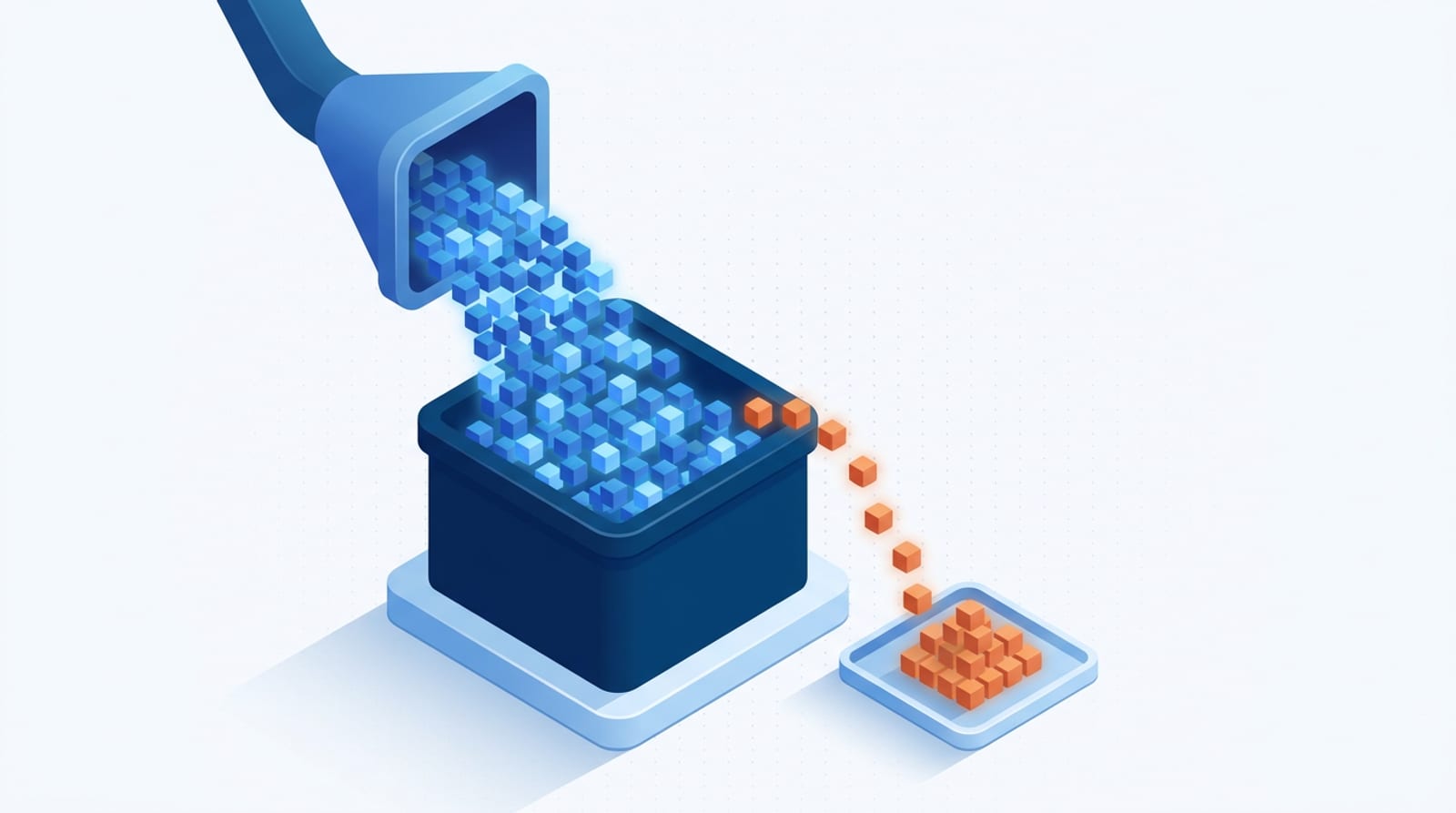
The practical reading is that the output bill has two layers and you see one. The text the user reads is the tip; the internal draft is the volume, and it is what the effort parameter controls.
That is why the reasoning detail field is the first instrumentation to turn on before any attempt to optimize cost. Without it, you do not know which of the two layers is growing.
What changes between the five levels
Effort affects all tokens in the response, not just reasoning: text, tool call arguments and reasoning, all three. That breadth explains why the effect on cost is larger than if it only touched the internal draft.
The documented behavior follows the height. On low the model minimizes reasoning and skips it on simple tasks, which makes it the official recommendation for subagents and high volume. On medium reasoning is moderate and can still be skipped on a simple query. On high, which is the Opus 5 default, it almost always thinks. On xhigh it always thinks deeply, with extended exploration. And on max it thinks with no restriction on depth or spending, which is literally how the documentation describes it.
In tool-using flows the effect is broader than the staircase suggests. Lower effort makes the model group operations into fewer calls, go straight to action without preamble and confirm briefly. Higher effort makes it call more tools, explain the plan before acting and summarize changes in detail. Since each call reprocesses the history as input, effort ends up multiplying both sides of the bill in an agentic loop.
A detail that only shows up on the monthly bill: the resolved effort value goes into the rendered prompt, so changing the request's main level in the middle of a conversation invalidates the cache. Choose the level at the start of the session and keep it. The exception, according to the documentation read on November 11, 2026, is per-message effort switching, still in beta and with its own header: on Opus 5 it preserves the cache, but it is not available on Amazon Bedrock.
How much each level costs
Artificial Analysis publishes one page per effort variant of Claude Opus 5, running the same index on the same model. The values below are measured by them; the normalization is our calculation.
| Level | Index | Suite output tokens | Suite cost | Speed | First word |
|---|---|---|---|---|---|
| low | 52 | 12M | US$ 555.25 | 50.0 t/s | 2.35 s |
| medium | 59 | 29M | US$ 1,116.24 | 50.2 t/s | 3.99 s |
| high | 61 | 52M | US$ 1,974.35 | 50.2 t/s | 18.55 s |
| xhigh | 63 | 76M | US$ 2,909.30 | 52.0 t/s | 35.99 s |
| max | 63 | 100M | US$ 3,836.05 | 52.7 t/s | 67.92 s |
Source: Artificial Analysis, per-effort-variant pages for Claude Opus 5, read on August 31, 2026. Identical price at all five levels: US$ 5 per million input, US$ 25 output.
Output consumption goes from 12 to 100 million tokens, a factor of 8.3. Artificial Analysis itself records the same behavior on the GDPval benchmark, where it describes the effort levels spreading 407 Elo points with token usage varying about 8 times from low to max.
A calculation the table allows and that is rarely done: subtracting the cost of output tokens from the total cost leaves the input spend. It goes from about US$ 255 on low to US$ 1,336 on max, meaning input also grows, by around 5 times. This confirms the mechanism: in agentic workloads, more effort means more round trips, and each round trip reprocesses the history. A caveat: this value mixes cached and uncached input, so it serves as an order of magnitude, not an exact count.
How much quality each level delivers
With high as the base of 100, the full staircase looks like this. Every cell comes from public measurement; the label indicates whether the number is measured or an arithmetic derivation of it.
| Level | Relative cost | Relative quality | Relative latency | Savings vs high | Quality difference |
|---|---|---|---|---|---|
| low | 28.1 | 85.2 | 12.7 | -71.9% | -14.8% |
| medium | 56.5 | 96.7 | 21.5 | -43.5% | -3.3% |
| high | 100 | 100 | 100 | base | base |
| xhigh | 147.4 | 103.3 | 194.0 | +47.4% | +3.3% |
| max | 194.3 | 103.3 | 366.1 | +94.3% | +3.3% |
Our calculation on the values measured by Artificial Analysis. Relative latency uses time to first word, not total duration.
Anthropic publishes its own measurements that point in the same direction, with a different methodology and a different workload. In long-horizon programming with Opus 5, the medium level gave up about 2 points for half the cost and low about 8 points for a quarter. And on SWE-bench Pro, running everything at the default solved 91.7% at US$ 1.39 per task, while running everything on low and reprocessing only the failures at the default reached about 93% for about US$ 0.70, the same success rate for half the price.
It is worth noting what Anthropic says about low in an agentic context, because it goes against intuition: on Zapier AutomationBench, Opus 5 at the lowest effort level passes more tasks than any other model. The bottom step of this model is not a weak step in absolute terms.
How much each additional quality point costs
The marginal cost per index point is the reading that decides where to stop, and it is not linear.
- low to medium · US$ 80 per point Seven index points for US$ 561 more on the suite. It is the cheapest step on the staircase.
- medium to high · US$ 429 per point Two points for US$ 858. The price per point multiplies by five. This is where the curve turns.
- high to xhigh · US$ 467 per point Two points for US$ 935. Still expensive and still delivers.
From xhigh to max it is US$ 926.75 more on the same suite for the same result of 63 points. It is not a gain too small to justify the price: it is the absence of any measured gain.
The Pareto frontier ends at xhigh
The Pareto frontier is the set of configurations that deliver the best possible quality for each budget range. A configuration falls off the frontier when another delivers the same or more for less.
On this suite, four of the five levels are on the frontier and one is off. Low is the best option below a US$ 600 budget, medium below US$ 1,200, high below US$ 2,000 and xhigh below US$ 3,000. Max is not the best option in any range, because xhigh delivers the same score for 32% less. It is dominated.
This holds for this suite and for the date of reading, and it is exactly the kind of result that changes by workload. Anthropic positions max as the option for when correctness matters more than spending, and the Opus 5 migration guide itself says xhigh and max exist for measured gains, not as a starting point. Both statements coexist: max may be worth the price on a frontier task and not worth it on a general-use suite.
The same care applies when comparing different models, because a score without the effort level beside it mixes configurations. In the AI model comparison we maintain, effort appears next to the score whenever the measurement declares it, and each number carries its source and date.
Latency does not change the way you expect
Generation speed is practically the same at all five levels, between 50.0 and 52.7 tokens per second. What explodes is the time to the first word, because that is where the model thinks.
That is 29 times more waiting between low and max before anything appears on screen. For a route with a person waiting, this decides the level before any cost argument. For background work, it decides nothing.
Is there a task where thinking more makes the result worse?
There is, and the vendor documents it without euphemism. The official guidance records that on most workloads the max level adds significant cost for a relatively small quality gain, and that on structured-output tasks or tasks less sensitive to intelligence it can lead to over-elaboration. The Opus 5 migration guide repeats the warning: higher levels may show diminishing returns and over-elaborate on simple tasks.
Developer reports on technical forums throughout August 2026 describe exactly this behavior and mention better-scoped output at intermediate levels than on xhigh. These are reports, not measurements, and they are included here as a signal that converges with what the documentation says, not as independent evidence.
It is worth separating two adjustments that get confused. Effort controls the volume of reasoning, not the length of the visible response: on Opus 5, changing effort does not reliably shorten the text. A response that is too long is fixed with a conciseness instruction in the prompt, and Anthropic itself measured about a 20% reduction in length with a short instruction.
What these benchmarks do not tell you
All the numbers above measure reasoning, programming, tool use and general knowledge. None of them measures information extraction from long documents by effort level, and that is the gap that matters most to anyone processing contracts, transcripts or reports.
What exists publicly and is adjacent, with the limit of each one:
- MedScribeClinical note from a consultation transcript, with 100 specialist rubrics. Opus 5 scores 90.99%, but there is only the maximum effort point.
- AA long contextOne hundred questions on documents of 10,000 to 100,000 tokens, requiring synthesis of scattered information. No breakdown by effort level.
- Legal Research and MortgageTaxReading of legal and tax documents, measured by Vals AI. Also only at maximum effort.
- Omission rate per levelNo public measurement exists. It is the metric that matters most for meeting minutes and extraction, and it is precisely the one nobody has published.Gap
The honest conclusion is that programming and reasoning benchmarks do not convert into a quality percentage for document extraction. The shape of the task is different, the cost distribution is different, and the failure mode is different: in code, failure shows up as a test that breaks; in meeting minutes, failure is a commitment nobody noticed had disappeared.
Methodology, limitations and sources
Research conducted on August 31, 2026, with a review on November 11, 2026 of the official pricing, effort and Opus 5.5 overview pages and the Claude Code model configuration documentation. The per-level measurements are still those of Opus 5. The operating rules and billing come from the Claude platform documentation, on the effort, reasoning steering and pricing pages and in the Opus 5 migration guide. Anthropic's own measurements come from the cost and intelligence optimization guide. The per-effort-level numbers come from the Artificial Analysis per-variant pages, and the domain benchmarks from Vals AI.
Four limitations change how you should read the numbers. Each line of the Artificial Analysis suite is one run per level, so differences of one or two points are within the expected noise of a single run. The suite cost reflects its task distribution, not yours. Anthropic's measurements are published as directional by the vendor itself. And the price is list price: volume contracts change the arithmetic.
Nothing here was measured in an X-Apps lab. This is documentary research on public sources, and the only way to get the number for your workload is to run an effort sweep over real requests.
Frequently asked questions
There are five: low, medium, high, xhigh and max. They live in output_config.effort and do not require a beta header. On Opus 5 the API default is high, and passing high explicitly is identical to omitting the parameter. On Claude Opus 5.5, launched on September 22, 2026, the default became medium.
Yes, as output tokens, at the same rate as visible text. On Claude Opus 5 that is US$ 25 per million; on Opus 5.5, US$ 20. The charge is the same whether or not you display the reasoning.
Yes. The usage.output_tokens_details.thinking_tokens field shows the raw billed reasoning. output_tokens remains the authoritative billing total, and the detail field is read-only, for observability.
The price per token is identical across all five. What changes is the volume. On the Artificial Analysis suite, the total cost went from US$ 555 on low to US$ 3,836 on max, with high at US$ 1,974.
On the measured suite, no: max and xhigh tie at 63 points and max costs 32% more. It is dominated on the Pareto frontier. Anthropic's documentation also positions xhigh and max as choices for measured gains, not as a starting point.
Only up to the high level. Combining thinking disabled with xhigh or max returns a 400 error. And the official recommendation is to prefer lower effort with reasoning on, because turning it off has two known failure modes. On Opus 5.5 reasoning cannot be turned off at any level.