Índice do artigofaltam 7 min de leitura
A disclosed vulnerability is good news for those who have someone to apply the fix. For those who do not, it is a clock ticking.
Let us start with what this article is not. X-Apps uses n8n, likes n8n and recommends it often. It is one of the most productive automation tools there is, with a huge integration catalog and a learning curve short enough for non-developers to build useful things.
It is also not an article about selling anyone's license. It is about a specific slice: small operations where the data flowing through the automation is worth much more than the automation itself. A firm handling non-public information, a consultancy that sees client numbers before the market does, healthcare, credit, M&A. These are operations where the archive is the main asset, and a badly placed automation exposes exactly that. In these cases, self-hosting becomes a different kind of decision, and it is worth understanding exactly what it starts demanding from you.
Article summary
- The NVD recorded 217 n8n server vulnerabilities between January and November 10, 2026, with 40 rated 9.0 or higher by the highest score recorded for each CVE and two with the maximum score of 10.0. With the same filter applied on November 11, 2026 to the 2026 records published up to August 20, there were 142.
- A high CVE volume does not prove bad software: it proves adoption and an active disclosure program. What it measures precisely is how many updates you had to apply.
- When self-hosting, the duty to update is yours, and n8n's own documentation advises against updating production without backup and testing. That is recurring human work.
- In a low-volume operation, a server running 24 hours costs money and stays exposed even when it executes nothing. A pay-per-execution model solves both problems.
There were 217 n8n server vulnerabilities in 2026 through November
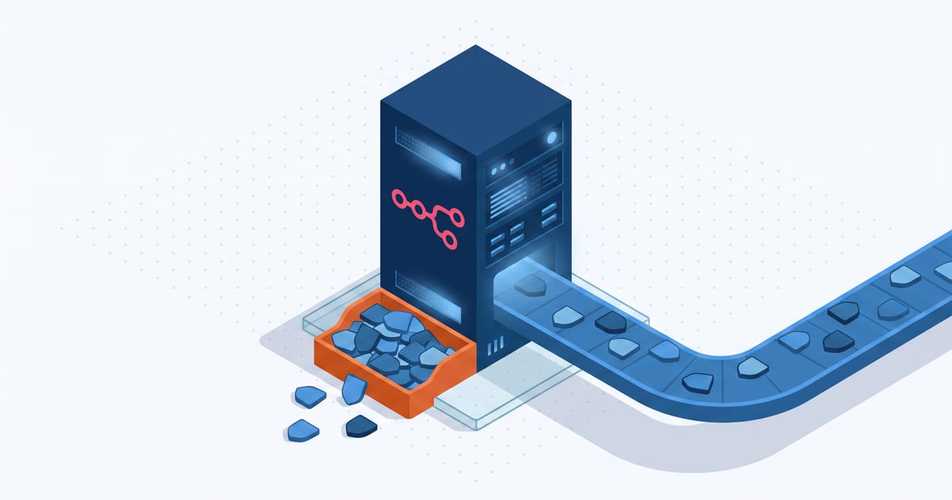
Querying the NVD, the United States' National Vulnerability Database, for the keyword n8n and filtering the records that describe the n8n server (excluding n8n-MCP and third-party projects with similar names), you get 234 vulnerabilities published since 2023, counted through November 10, 2026. The distribution by year is what matters.
Source: NVD API (services.nvd.nist.gov), keyword query "n8n", read on November 11, 2026 with records published through November 10. Universe: 247 raw records, filtered to the 234 whose descriptions concern the n8n server. The year follows the NVD publication date.
Two of them received a score of 10.0, the maximum on the scale, in at least one of the published assessments: CVE-2026-21858 and CVE-2026-54309. A 10.0 score indicates a flaw exploitable over the network, without authentication and with severe impact.
What this means for the decision: each line of this chart is an update someone had to plan, test and apply. The number does not describe the software, it describes the work.
Why the high count does not mean bad software
This needs to be said, because the lazy reading of the chart above is unfair and leads to the wrong decision.
CVE volume measures three things at once: amount of code, number of researchers looking and the vendor's willingness to publish what it finds. Popular software attracts research. Serious vendors publish. The combined result is a high number that, in isolation, looks like an accusation and is not.
There is even an argument in its favor: a project that publishes 217 records in a little over ten months has a working disclosure process. Silence would be a worse sign.
The problem, then, is not that the flaws exist. It is what happens after them.
The problem is the duty to update, and it is yours
In the self-hosted model, each published fix becomes your task. And n8n's own documentation is honest about how hard that is: it recommends keeping the version up to date and, at the same time, warns against automatically updating production without a backup, because a new version may change the behavior of nodes and dependencies. The guidance is to back up first and test the important flows and webhooks afterwards.
Translated into the routine of a five-person company: every time a relevant fix comes out, someone needs to stop what they are doing, back up, update, test the flows that matter and go back. In a year with dozens of relevant fixes, this stops being occasional.
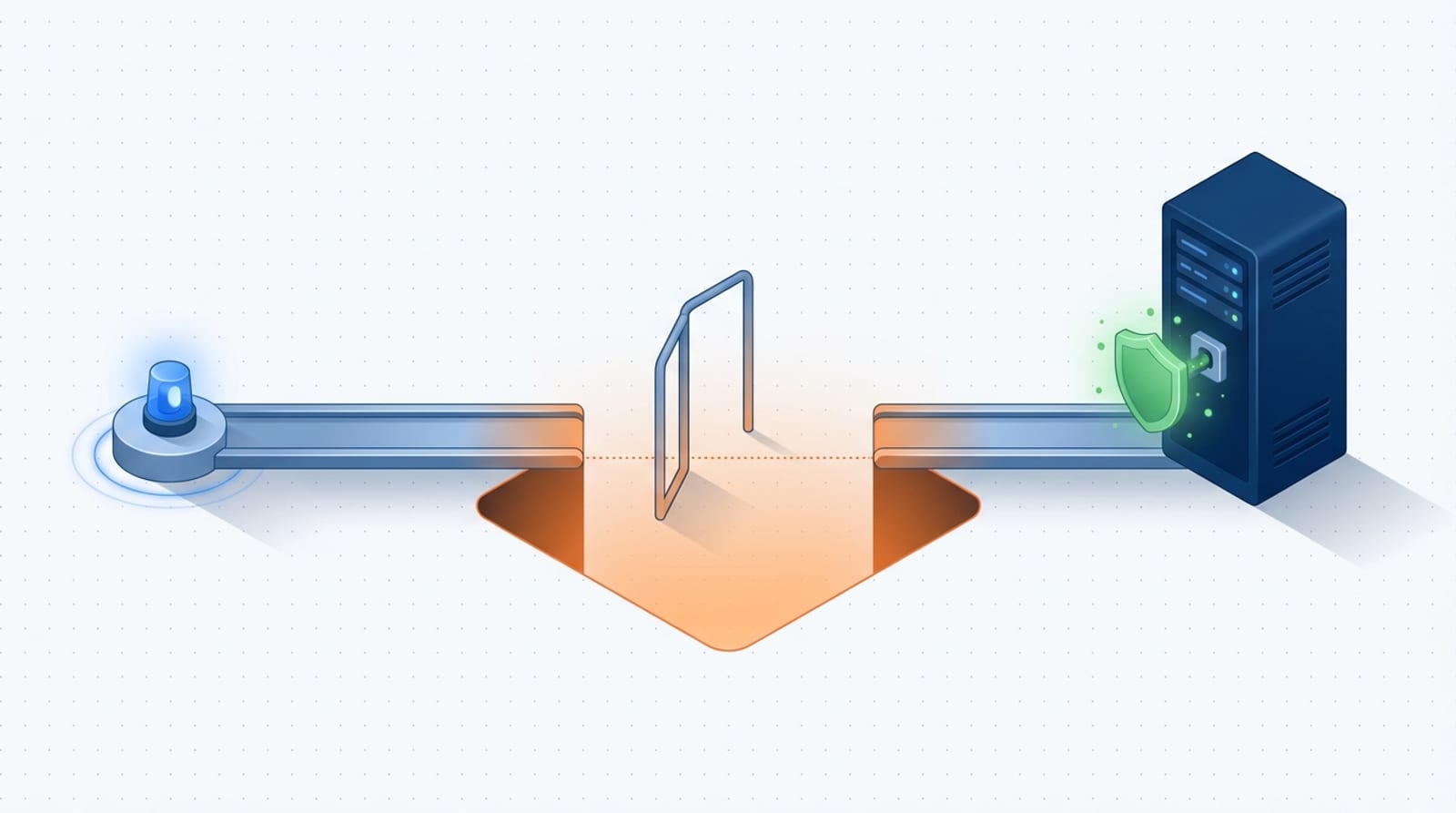
Between the fix being published and the moment you apply it, there is a window. During it, the flaw is public and your environment has not been fixed yet. The more popular the software, the more people know how to exploit it within that window.
In an operation with an infrastructure team, the window is short and known. In an operation without that team, it depends on someone remembering, and it usually lasts weeks.
There is a way out within n8n itself, and it is the right answer for many people: n8n Cloud, the managed version, where updating and operating the server are the vendor's job. That solves the patching duty. The second question still stands, which is about where your data travels, and you answer that question regardless of the tool.
A server running 24 hours costs money even when it does nothing
Self-hosting has a second characteristic that goes unnoticed in a small operation: it is not triggered by events, it stays on. An automation server with a database and a queue runs the whole month, whether or not there is work.
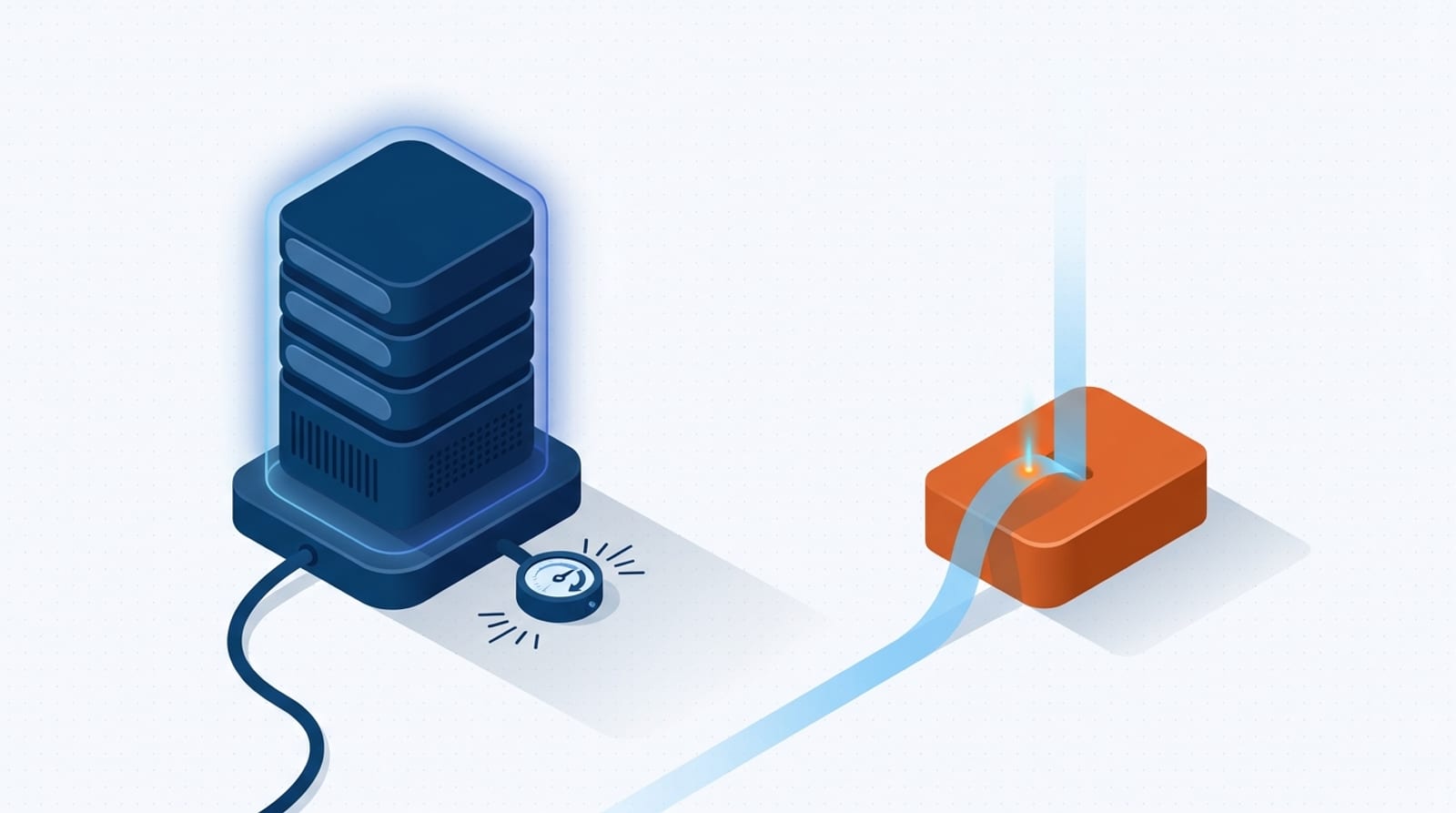
In an operation that runs a few dozen routines per month, this means paying for a practically idle machine and, above all, keeping a surface exposed on the internet 24 hours a day to serve a load that would fit in minutes of processing.
The highlighted quadrant is where most small companies really are at the start, and where the decision matters little. The decision matters in the top-left quadrant, which is the slice of this article: data that cannot leak and a volume that does not justify your own infrastructure.
The alternatives inside the ecosystem you already pay for
If the company already has Microsoft 365, there are two native paths, and they differ less in capability and more in billing model and the profile of who builds.
| Criterion | Power Automate | Azure Logic Apps | n8n self-hosted |
|---|---|---|---|
| How you pay | US$ 15 per user/month on the Premium plan, billed annually | Per execution on the Consumption plan, with the first 4,000 built-in actions per month included | Infrastructure, running the whole month |
| Server to maintain | None | None, on the Consumption plan | Yes, with updates and backup on you |
| Who builds | Business person, with technical support | More technical profile | Intermediate profile |
| Integration with SharePoint, Outlook and Teams | Native connectors | Native connectors | Via API, with credentials stored by you |
| Breadth of integrations outside 365 | Good, via connectors | Good, via connectors | Largest catalog of the three |
Prices read on Microsoft's official pages on August 31, 2026 and checked again on November 11, 2026, with no change. Power Automate also offers the Process (US$ 150 per bot/month) and Hosted Process (US$ 215 per bot/month) plans, aimed at unattended desktop automation.
Power Automate is highlighted for a practical reason, not technical superiority: for a small team that already pays for Microsoft 365 and needs automation over SharePoint, email and spreadsheets, it solves the problem with the least implementation effort and with nobody maintaining a server.
An honest caveat about the pay-per-execution model, because it has a catch: Microsoft documents that Logic Apps on the Consumption plan charges per operation execution, including retry attempts. An action with five retries is billed as six executions, and a loop over a list of ten items generates eleven executions. A badly designed flow gets expensive even without a server.
When n8n is still the right answer
In many cases, and this is not an end-of-article concession.
- There is someone formally responsible for updating and monitoring the environment
- The volume of executions justifies paying for a machine that is always on
- The data flowing through is not non-public material or confidential third-party information
- The integration catalog solves something the native connectors do not
- Or the managed option fits, transferring server operations to the vendor
If you checked all five, self-hosting is a solid choice and probably cheaper. If you did not check the first one, the math changes, because the maintenance cost does not disappear: it just stops being accounted for, and comes back as risk.
It is also worth noting a point that is not about security but about contracts: n8n is distributed under the Sustainable Use License, a fair-code license, not an OSI-approved open source license. Internal use in your company is allowed; reselling n8n as a hosted service to third parties is not. For most companies this is irrelevant, but anyone thinking of offering automation as a product needs to read the license first.
Who applies the fix on Friday night?
That is the question that decides, not "which tool is better". If a critical flaw is disclosed on a Friday night, who on your team applies the fix before Monday?
If the answer is a name, self-hosting works. If the answer is silence, choose a model where that task is not yours, whether the tool's own managed version or a pay-per-execution service inside the environment you already pay for.
Sources and method
Original research from August 31, 2026, revised on November 11, 2026. Vulnerability data comes from the public NVD API, queried with the keyword "n8n": 247 raw records published through November 10, filtered to the 234 whose descriptions concern the n8n server, excluding n8n-MCP and third-party projects with similar names (such as community nodes and workflow builders). The severity band uses the highest CVSS score recorded for each CVE, including the secondary score published by GitHub as a CNA. By the NVD's own primary score, the critical ones in 2026 would be 26, and 70 of the year's 217 records still have no primary score. The November 11 revision corrected two points of method from the August version. The old filter excluded official server records that cite native nodes by the identifier "n8n-nodes-base" (such as n8n-nodes-base.code); now only descriptions of third-party node packages are removed. Severity moved from the first listed score to the highest recorded score. Because of this, for 2026 records published through August 20, the count went from 126 to 142 and the critical ones from 21 to 37. As a secondary caveat, the NVD also revises scores over time, and the same query may change slightly from one month to the next. The guidance on updates and the license comes from n8n's official documentation. Prices and billing model come from Microsoft's official pages for Power Automate and Azure Logic Apps. n8n and Microsoft are companies external to X-Apps and have no commercial relationship with this content. X-Apps uses n8n in its own projects and in client projects.
Frequently asked questions
That is not the conclusion. n8n publishes and fixes the flaws found, and most of them require an already authenticated user with permission to edit workflows. The point is different: in self-hosted mode, applying each fix becomes your responsibility.
CVE volume reflects adoption and disclosure activity, not just code quality. Popular software gets more attention from researchers, and an active disclosure program publishes more. What the number measures precisely is how many updates you had to apply.
It solves a large part, because updating and operating the server become n8n's job. It is still a decision about where your data travels, which is a different and equally important question.
For automation inside Microsoft 365, usually yes, with native connectors and no server to maintain. For integrations outside that ecosystem, n8n's catalog of nodes tends to be broader.
It means there is no machine of yours running and waiting for work. The service runs when it is triggered and you pay for what ran, which eliminates the continuously exposed surface and the fixed cost of idle time.
When the volume justifies it, the data is not critical, someone is responsible for updating the environment and n8n's integration catalog solves something the native connectors do not.