
Índice do artigofaltam 7 min de leitura
What you save and what you spend fall into different price tiers. That sentence fixes most of the wrong calculations about video analysis.
The promise going around is a large token reduction. It is real and documented. The problem is that almost every spreadsheet translates a token reduction into a money reduction in the same proportion, and that translation is wrong for a reason the vendor itself publishes.
This article does the math. It is the economic layer of the article on what video analysis unlocks for a company, and it works with the official tables read in September 2026.
Article summary
- The tokens you save are input; the navigation you add is counted as thinking, and thinking is charged at the output tier, five times more expensive.
- The table price has a declared expiry date: it doubles on January 1, 2027.
- Cache is cheap to read and has a per-clock-hour price to hold, which runs even when nobody asks anything.
- Price per query decides nothing. Cost per accepted answer decides, because it includes the reviewer's time.
What you save and what you spend have different prices
The navigation mode documentation describes two destinations for consumption, and they are not the same. The reasoning the model uses to explore the timeline is counted as thinking tokens. The frames, audio and transcript it loads on demand are counted as tool use tokens.
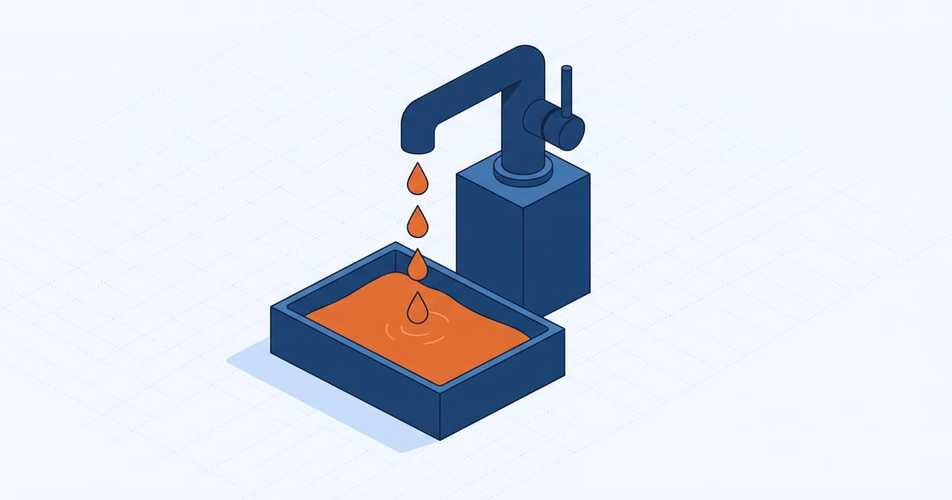
Now check that against the price table. It prices input, and it prices output with a note in parentheses: including thinking tokens. In the table read on September 10, 2026, for the Flash models cited, input costs 0.75 dollars per million tokens and output costs 3.75.
Five times. That is why removing a lot from the cheap tier and adding a little to the expensive tier returns less savings than the drop in tokens suggests. It does not mean the savings disappear: it means the proportion announced in tokens is not the proportion that reaches the invoice, and the only way to know yours is to measure.
Prices in dollars per million tokens for the Gemini Developer API paid tier, read on September 10, 2026. Result published by the vendor, not our own measurement.
The formula, with categories that do not overlap
An honest calculation separates what is counted only once. These are the categories, and they are mutually exclusive on purpose, so nobody adds the same token twice:
For static mode there is a published formula, and it lets you anchor the order of magnitude: each frame costs 66 tokens at low media resolution and 258 at high, audio costs 32 tokens per second, and the documentation itself rounds to about 100 tokens per second of video at low and about 300 at high. One hour comes to something between 360,000 and one million tokens of input alone.
For navigation mode we did not find a published formula. The documentation says consumption varies with content complexity and the model's navigation strategy. Any estimate there, made without measuring your material, is a simulation, and any text that presents it as a forecast is making it up.
Today's price has an expiry date
The official table does not hide it: for the Flash models cited, input at 0.75 dollars and output at 3.75 are valid until December 31, 2026, rising to 1.50 and 7.50 on January 1, 2027. Cache follows, from 0.075 to 0.15.
That changes any annual projection. A pilot approved today based on the current unit cost, going into production in the first quarter of next year, operates the whole year at the doubled price. The feasibility calculation needs to be done with the second table's price, not the first, and the difference between the two is large enough to turn a yes into a no.
Caching is cheap to read and expensive to hold
This is the line that almost never makes it into the spreadsheet, because it is not charged by use, it is charged by time.
Context cache has two prices. The read price is low. The storage price is half a dollar per million tokens per hour, in the table valid through the end of 2026, doubling afterwards. Applied to video, the number gets concrete quickly: one hour of recording at low media resolution takes up about 352,000 tokens, which comes to about 18 US cents per clock hour, or close to 4 dollars per day.
Simulation based on the cache storage price read on September 10, 2026 and on the declared static tokenization. It is not a measurement: it is arithmetic on published numbers.
The three usage patterns need separate calculations
The same product has completely different economics depending on the query pattern, and mixing the three is the fastest way to reach a meaningless number.
| Pattern | What dominates the bill | What usually solves it |
|---|---|---|
| A few questions about one video | Media input and thinking, per call | On-demand analysis, with no cache and no index |
| Many questions about the same file | Repeating the same input for each question | Cache within the window, or a single structured extraction that answers several questions later |
| Recurring search across a large archive | Scanning material that answers nothing | Pre-indexing, because on-demand analysis does not scale for scanning |
The second pattern has a way out that almost nobody considers and that usually wins: instead of asking the video ten times, ask once and extract a rich structure, which the next ten questions query in a database, for free. That trades ten expensive calls for one expensive call and ten trivial queries, and it works whenever the questions are predictable.
The third is the most misleading. Scanning an archive with on-demand analysis means paying for the model to look, on every query, at material already known to be irrelevant. It is the case where an index layer, even if it costs something to build, changes the order of magnitude.
The half-price discount is next door
There is a documented path that cuts cost in half: batch processing, described as 50% of the standard cost, with a target turnaround of 24 hours, designed for large, non-urgent volume. That is exactly the profile of whoever is going to process an archive.
The caveat is at the top of the same page, and it is literal: the feature is described as available only with the content generation API. The official example of the navigation video mode uses another interface, the Interactions API.
Reading the two pages together, the discount is documented on a different surface from the one the video feature example uses. That is not the vendor saying batch does not work with video, and it is exactly the kind of assumption that needs to be confirmed in writing before going into a spreadsheet, because it is worth half the budget.
Cost per accepted answer, the metric that decides
Price per query compares vendors. It does not decide projects, because it ignores the variable that weighs most: how many answers were any good.
The metric that decides is the total spent divided by the answers that survived human review. It puts the API price and the reviewer's time into a single calculation, and it often reverses conclusions: a cheap system that is right half the time costs more than an expensive one that is almost always right, because each discarded answer consumed API price and a person's time.
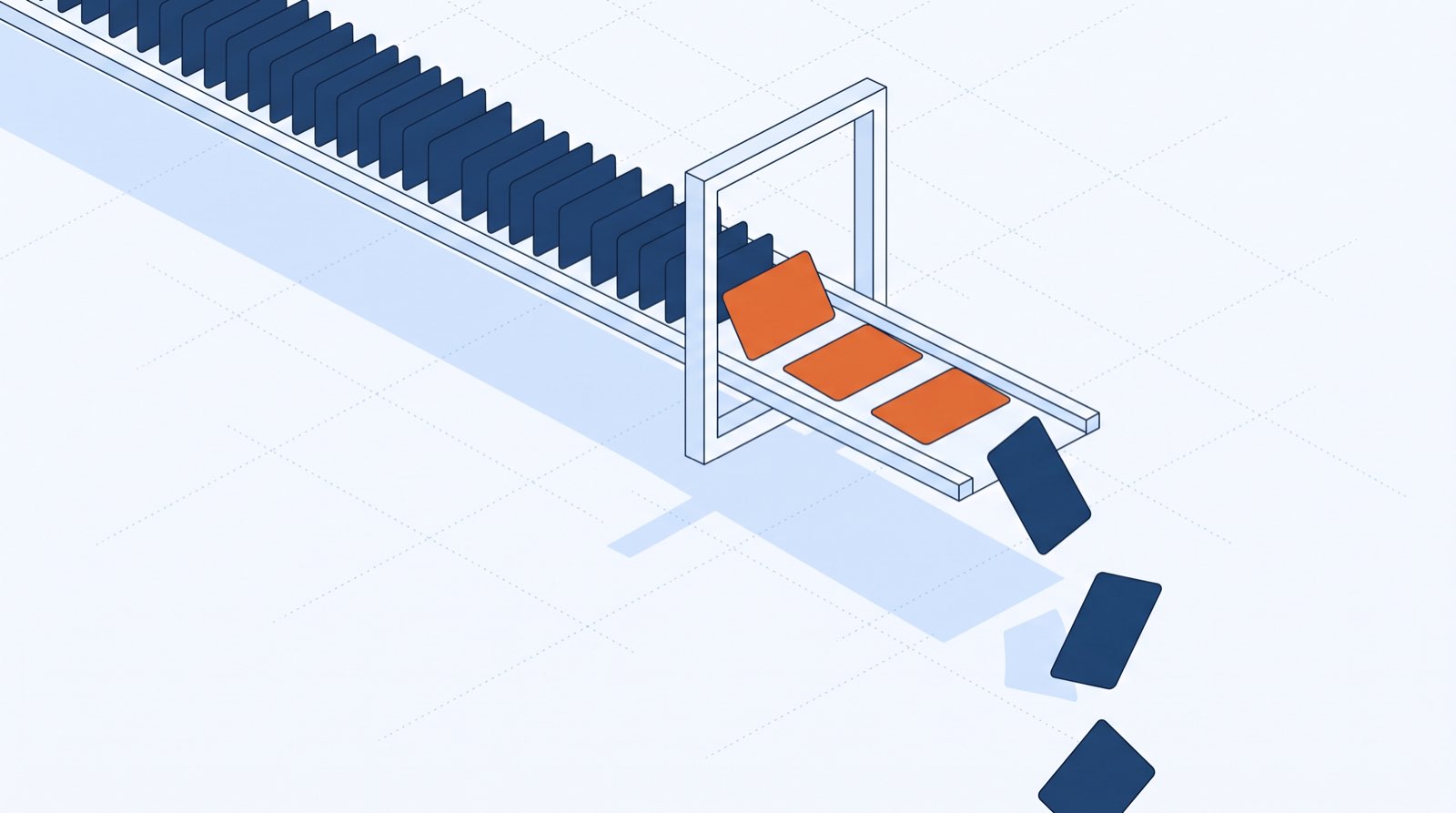
Measuring this does not require sophisticated instrumentation. You only need to record, per answer, the cost from the counters the API returns, whether it was accepted and how long the review took. Three fields. After a few hundred answers, the math settles itself and stops being a matter of opinion.
When the math does not work
Three situations where the number does not add up and the right move is to stop before buying.
When the questions are about what was said, transcription with search solves it cheaper, faster and with less risk surface. When nobody will review the answers, no option is suitable yet, because without review there is no cost per accepted answer, only cost. And when the right answer does not change what anyone does, the problem is not video technology: it is process, and no token reduction solves it.
Frequently asked questions
No, and that is where most calculations go wrong. The frames the navigation mode skips loading are input tokens. The navigation it adds is counted as thinking tokens, and the price table charges output including thinking tokens. In the table read in September 2026, output costs five times as much as input, so removing a lot from the cheap tier and adding a little to the expensive one returns less savings than the drop in tokens suggests.
For static mode, yes, because the tokenization is published: about 100 tokens per second at low media resolution and about 300 at high, which comes to between 360,000 and one million tokens per hour. For navigation mode, no: the documentation itself says consumption varies with content complexity and navigation strategy, and it publishes no formula. Any fixed number there is a simulation.
The official table has an expiry date. For the Flash models cited, input at 0.75 dollars per million tokens and output at 3.75 are valid until December 31, 2026, rising to 1.50 and 7.50 on January 1, 2027. A twelve-month projection made with the current price already carries double the unit cost in its second half.
It depends on how many questions you will ask and over what time, because the cache has two prices. Reading from cache is cheap. Holding it has a price per clock hour: in the table read in September 2026, half a dollar per million tokens per hour. One hour of video at low resolution takes up about 352,000 tokens, which comes to about 18 cents per hour of storage, or close to 4 dollars per day, running even when nobody asks anything.
It exists and is documented at 50% of the standard cost, with a target turnaround of 24 hours. The caveat is at the top of the same page: the feature is described as available only with the content generation API. The official example of the navigation video mode uses another interface. The two pages, read together, place the discount on a different surface from the one the video feature uses in the example, and that needs to be confirmed before becoming a budget assumption.
Cost per accepted answer: the total spent divided by the answers that survived human review. A cheap system that is wrong half the time costs more than an expensive one that gets it right, because the difference comes out of the reviewer's time, which almost never makes it into the spreadsheet.
Sources and method
The prices, declared tokenization and batch and cache rules come from the official Gemini Developer API pages, read on September 10 and 11, 2026: pricing, tokens, video understanding and batch processing. Values are in dollars per million tokens, on the paid tier.
The calculations in this article are simulations on published numbers, not measurements. No API call was made, no video was processed and no invoice was examined. Where the documentation publishes no formula, as in navigation mode, the text says so and does not estimate.
One gap was left open and it matters for any cost model: the pages read do not state how the tool use counter is billed. The price table names input, output including thinking, cache and search, and does not name tool use. That point needs to be settled with the vendor before the estimate becomes a budget.
Prices change, and this is the kind of article that ages by decree of a price table. The changeover dates cited here are the ones the table itself declared on the date of reading.


