
Índice do artigofaltam 8 min de leitura
What you know about your industry is the hardest asset to copy in this whole project. Your way of operating is the part that gets in the way the most.
There is a common moment for people who run a business well: you realize that, in your own company, you solved a problem everyone in your industry has. The control nobody does properly, the routine only you organized, the spreadsheet that became the brain of the operation. And the natural question comes: why not sell this to others?
The idea is usually good. What is almost always underestimated is the distance between working in your company and working in forty companies that are different from yours. This article is about that distance, and about what to decide before writing the first line of code.
Article summary
- Digitizing your company and building a product for your industry are two different projects, with different scopes, and confusing them is the most expensive mistake you can make at the start.
- Your knowledge of the industry gets the diagnosis of the problem right. Your way of operating gets the format of the solution wrong.
- Every process has a part that belongs to the industry and a part that belongs to your company. Only the first can become a product; the second becomes configuration or stays out.
- The client who most resembles you is the worst first client, because they confirm everything and test nothing.
Digitizing your company and selling software are two different projects
If you are reading this thinking the subject is computerizing your operation, the subject is something else. An internal system and a product to sell start from the same desire and end up in different places, and the difference appears in the very first scope decision.
An internal system can assume everything. It knows your company has three locations, that the Tuesday promotion is fixed, that closing is at 11 p.m. and that you are the one who approves discounts. Each of these certainties is a saving: the software gets simpler because it does not need to ask.
A product can assume almost none of this. Every certainty it carries becomes a company that cannot use it.
| Decision | System for your company | Product for your industry |
|---|---|---|
| Who defines the process | You | Each client, within limits you design |
| Business rules | Written in the code | Configurable, or out of scope |
| Who answers for an error | You, to yourself | You, to another company's operation |
| What happens when something changes | It changes for you | It changes for every client at the same time |
| Sign of success | Your operation improved | A company you do not know managed to use it on its own |
The last row is the one that most separates the two projects. As long as the only user is someone you can train personally, you do not yet know whether you have a product.
What you know about the industry is the asset. Your way of operating is not.
Industry knowledge is the valuable part and the way of operating is the dangerous part, and both arrive together in your head. Separating them is the core work of this phase.
Industry knowledge is knowing where it hurts: that loss control disappears at the end of the month, that shift changes lose information, that the supplier is late and nobody finds out in time, that there is a report every owner looks at and no system delivers properly. That is diagnosis, and no software vendor can buy it.
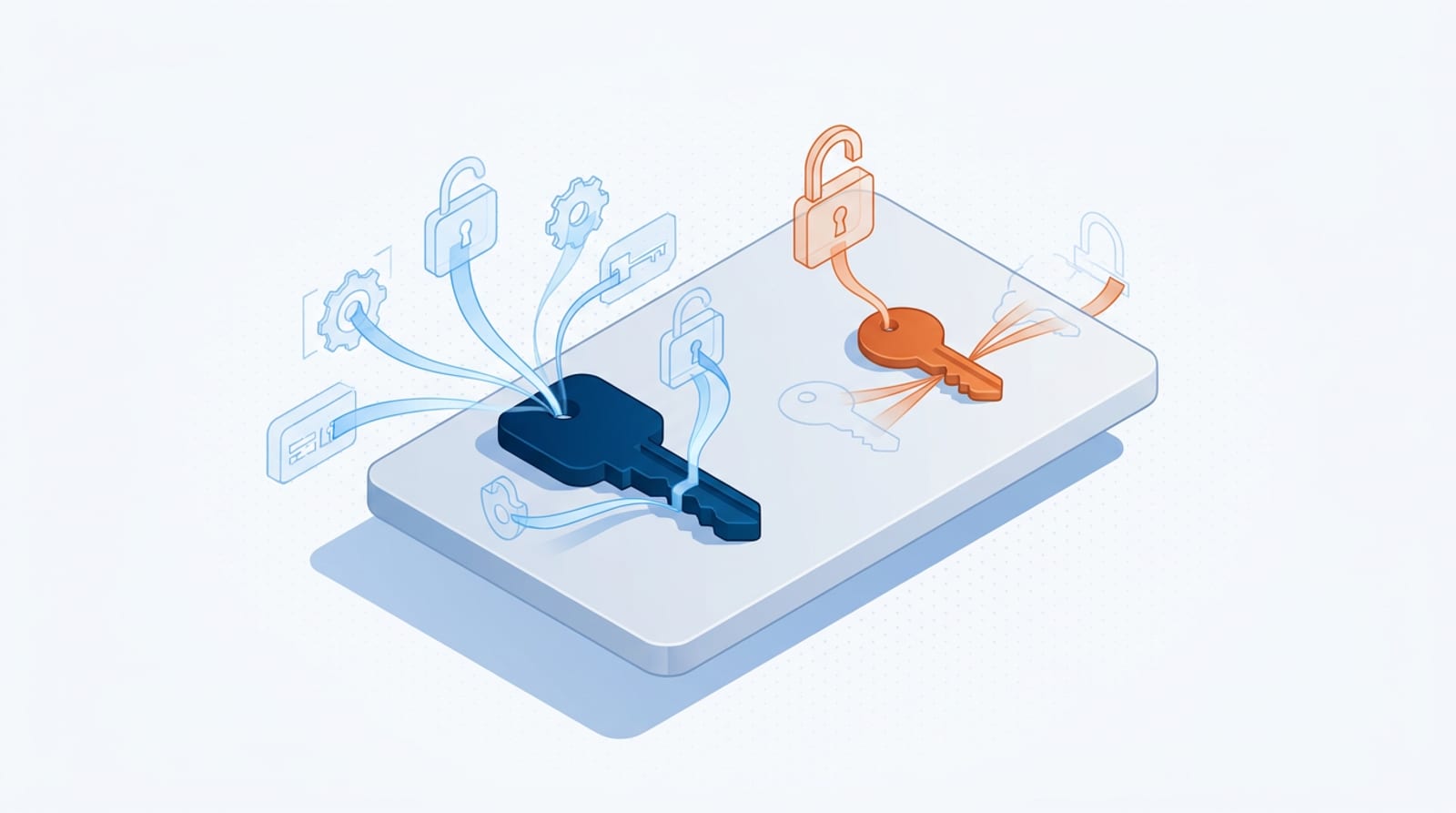
Your way of operating is something else. It is the specific sequence your company uses to solve that pain: who checks, in what order, with which document, at what time. That sequence works because it was polished within your constraints, with your team and your size.
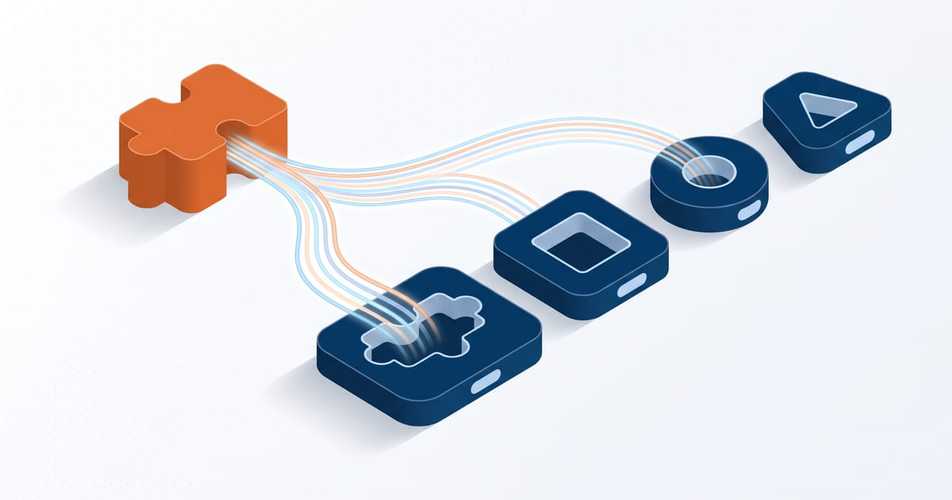
The classic mistake is not building the process in. It is not noticing that it was built in. When the software only accepts your path, it stops being an industry product and becomes your operation sold as if it were universal.
A quick test settles most cases: for each rule you want in the software, ask whether it exists because the industry needs it or because your company decided it. Delivery checking exists because the industry needs it. Always checking with two people at 8 a.m. is your company.
Four things only people who operate in the industry can do
The advantage of coming from operations is real and specific, and it is worth naming so you neither exaggerate nor dismiss it. It shows up in four places, and none of them is "I know how the system should be".
- Finding the right painYou already know which problem really costs money and which one is just annoying.
- Speaking the languageYou use the words the buyer uses, and that shortens every sales meeting.
- Opening doorsYour industry network picks up the phone, which no outside vendor can achieve.
- Reading the resultYou quickly notice when a number on the screen does not match the reality of the operation.
Notice that all four are about understanding and selling, not designing. That is why industry knowledge does not replace product work: it tells you where to go and not how to build the road.
Where software built for one operation breaks on the second
Software built inside one operation usually breaks with the second client, and almost never for lack of features. It breaks because it runs into a decision your company had made and that it treated as a fact.
The sequence below is the pattern that repeats when a good internal system is offered to a neighboring company in the same business.
-
Everything makes sense
The buyer recognizes the problems on the screen and gets excited, because the vocabulary and the pains are theirs.
-
The registration cannot be completed
A field that is mandatory in your operation does not exist in theirs, and the system will not let them move on without filling it in.
-
The order of the steps does not match
They approve before checking; you checked before approving. The software only accepts your order, and their team starts working around the flow to get their job done.
-
It becomes a customization request
The client asks for an exception. Accepting looks cheap and solves the month, and this is where the product starts turning into a project.
-
One version per client
Each new sale repeats the cycle, and maintenance starts costing per client instead of per product.
The breaking point is not the missing field. It is the order of the steps, because order is the part of the process that seems obvious to whoever created it and is invisible to whoever wrote it into the code.
Process, exception and configuration: what becomes product and what becomes debt
Every rule you want in the software falls into one of three boxes, and the box decides its cost for the coming years. This classification is what separates a product that scales from one that needs a person per client.
Industry process is what every client does, even if in different ways: receiving orders, controlling inventory, closing the register, issuing documents. That is the product. It is what you build once and sell forty times.
Configuration is the same process with different parameters: how many approval steps, which fields are mandatory, who sees what, what order the steps follow. That is also the product, but it costs more to build, because it requires you to anticipate the variation instead of fixing a value.
Exception is what only one client does and nobody else asked for. That is not product. Accepting an exception means taking on a line that someone will maintain, test and migrate in every future update, forever, for a single client.
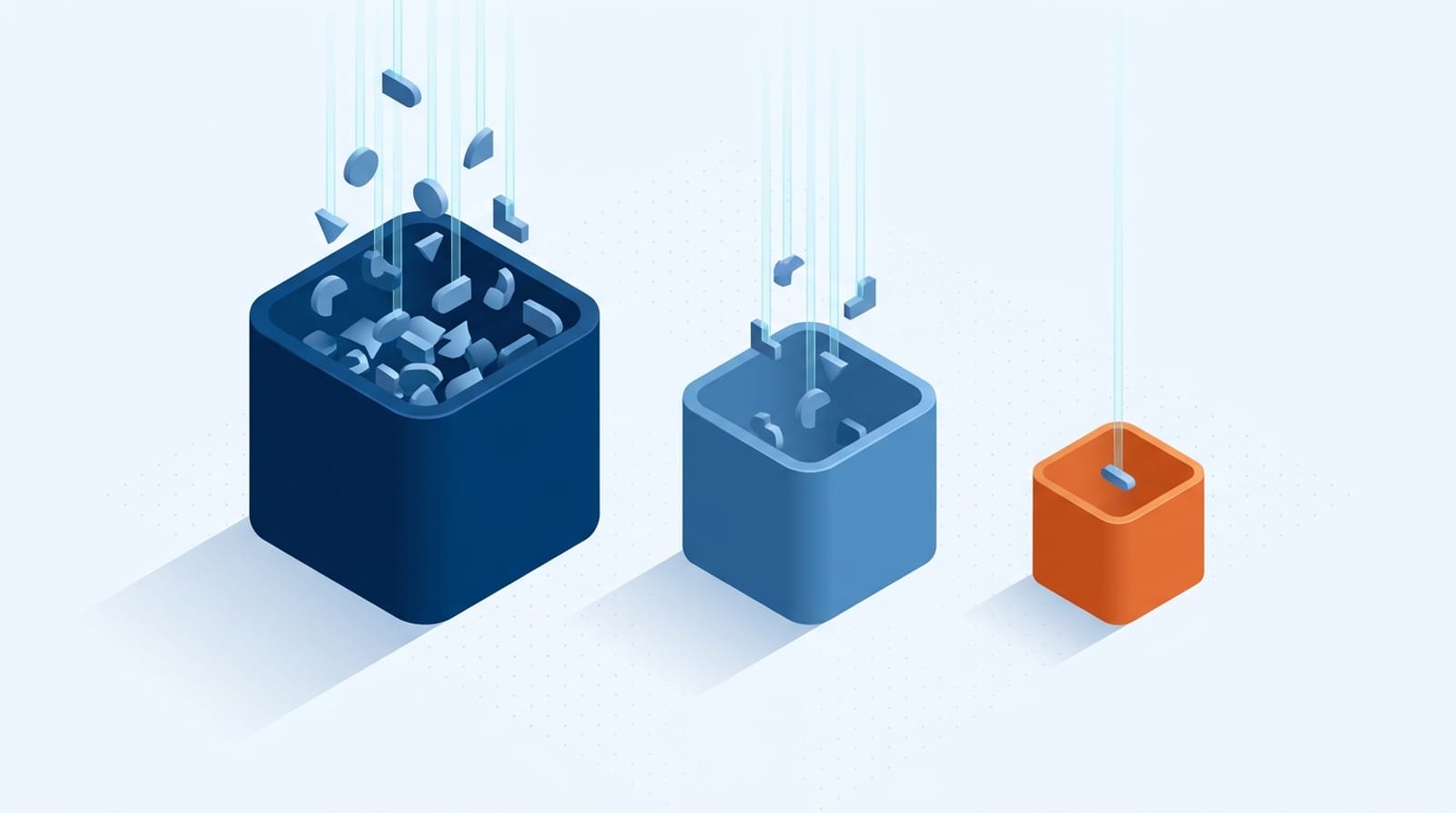
The practical rule that stands the test of time: an exception becomes a candidate for configuration when the second client asks for the same thing. Before that, it is one client's opinion, and one client's opinion does not pay for a permanent line of code.
How to choose the first version when you know the industry too well
Knowing too much gets in the way of choosing the first version, because everything seems equally essential. People who operate in the industry have firm opinions about every screen, and having firm opinions about everything is the same as having no priority.
The cut that works is not by importance, it is by universality. What goes into the first version is what every client in the industry needs to do, in the simplest way that solves it. What stays out is whatever depends on how your company does it, even if it is the part you like best.
- Does every client in the industry do this, regardless of their size and audience?
- If I fix this rule now, would any company I know be unable to use it?
- Does this solve a pain the buyer already recognizes, or one I need to convince them they have?
- Can I demonstrate its value without being there to explain?
- If I take this out of the first version, does the product still deliver something whole?
The fifth question is the one that saves the most. A first version needs to solve a whole, small problem, not a piece of every problem. Half of five features is not usable; one complete feature is.
If the discussion at this point turns into how much to invest now and how much to save for later, it has its own math, covered in MVP budget: how much to spend on v1 and how much to save.
The client who most resembles you is the worst first client
The first client who most resembles your operation is the one who teaches the least. They confirm all your choices, approve every screen and find none of the problems that will show up with the tenth client. The bill comes later, when the product has already been built on a sample of one.
Choosing the first clients is, in practice, a product decision. Two axes matter: how much their operation differs from yours, and how willing they are to change their process to use something new.
The recommended quadrant is the client who operates differently from you and is willing to adjust the way they work. They find the hidden assumptions while it is still cheap to remove them, and they can handle the natural instability of a first version. It is uncomfortable to sell and it is what produces a product.
What you will hear from those who already have a system
The most frequent objection when selling software to an industry is not price, it is switching. A good share of your buyers already use something, even if it is bad, and switching systems costs time, data and training.
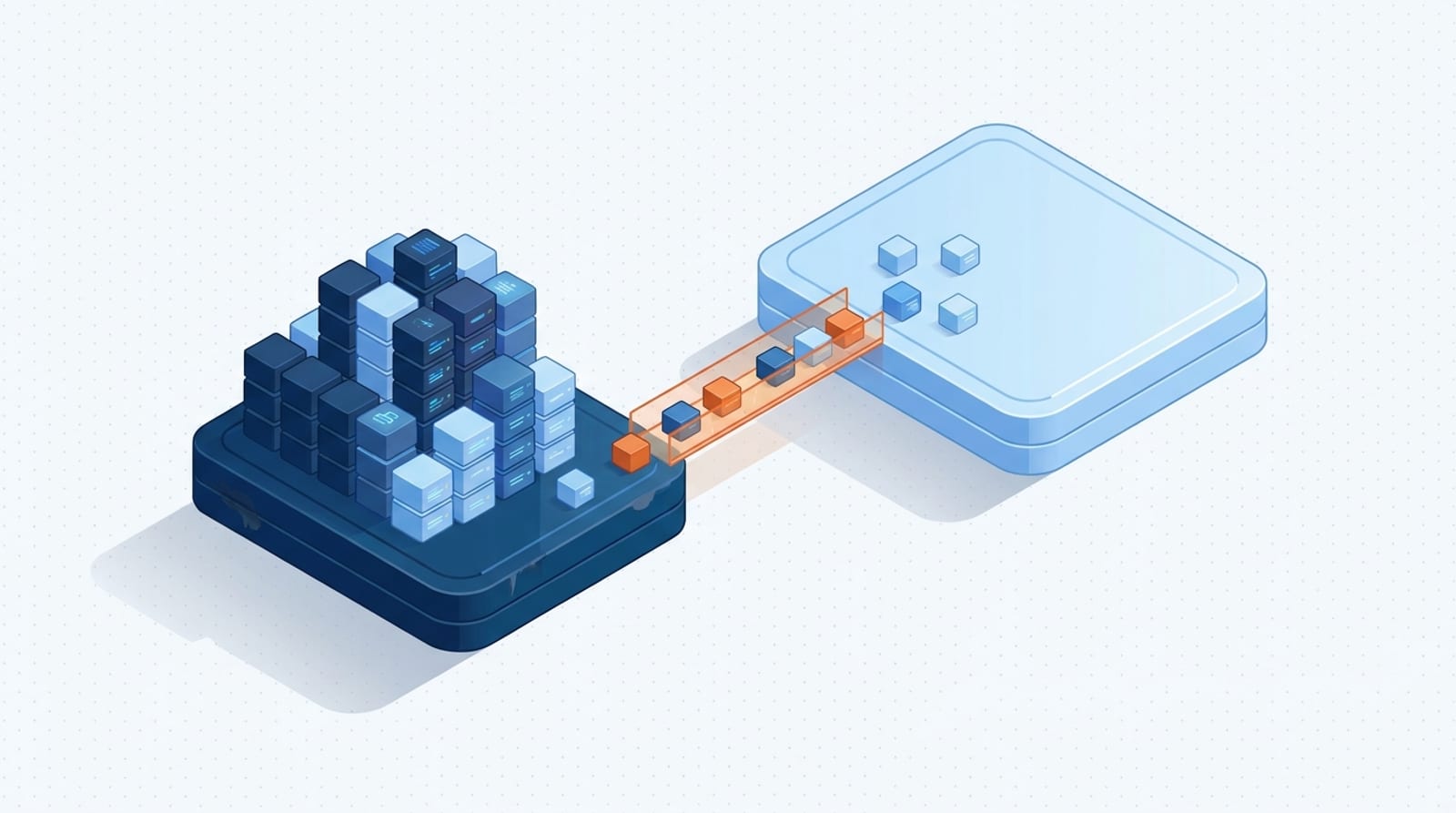
That changes what the first version needs to have. A product that solves the problem better but does not import the client's history loses to a worse system that is already running, because the buyer's math includes the cost of leaving where they are.
Two capabilities usually weigh more than a new feature at that point: being able to bring over the data they already have and being able to coexist with what they will not switch off now, such as the tax invoicing system or the card machine.
This is also good news for those who come from the industry: you know which systems your future clients use, because you have probably used some of them. That list is worth more than market research, and it should guide the integrations in the first version.
When the topic turns to connecting the product to what the client already has, the cost is rarely on your side of the connection, as we discuss in Why a systems integration budget overruns.
Frequently asked questions
It is an advantage in the diagnosis and a risk in the solution. You get the problem right because you have lived it, and you get the format wrong because you confuse your way of solving it with the only possible way.
An internal system serves one operation and can assume everything it does. A product serves several different operations and has to leave open what changes from one to the next. They are projects with different scopes.
Building in the result of your process usually works. Building in the exact sequence of steps usually locks out the client who operates differently. The practical distinction is between delivering what the process produces and forcing the path to get there.
A very similar company confirms everything you already think and tests nothing. It is worth having at least one first client with a different size, process or audience from yours, because that is the one who reveals what was built in without you noticing.
By separating what every client in the industry needs to do from what only your company does. What is common to everyone goes into the first version; what is your own way waits until a second client asks for the same thing.
It does, because their math includes the cost of leaving where they are. Being able to bring over the history they already have and coexist with what they will not switch off now usually weighs more in the decision than a new feature.
Sources and method
This article comes from X-Apps' commercial and product practice with founders who operate in an industry and decide to become its software vendors, and from a negotiation conducted in August 2026 with a restaurant operator who plans to sell a platform to other restaurants. The material was anonymized: no client is identified.
The patterns described here are observations from projects, not market measurements. We do not use industry success, churn or conversion rates because we have no data of our own to back them, and an unsupported number is the most expensive flaw in content meant to support decisions.


