Índice do artigofaltam 6 min de leitura
Same model. Same 100 tasks. Same documents, same requested file names, same grader. The pass rate ranged from 3.5% to 80.1%.
When an AI project delivers less than promised, the conversation goes to the same place: which model are we using, and how much would it cost to move up to the best one. It is the easiest question to ask, it is the only answer you can buy off the shelf, and an experiment published in 2026 suggests it is the smaller lever.
Before going on, it is worth defusing the lazy explanation. This is not about someone writing better prompts than someone else. The experiment below fixed the model, the tasks, the documents and the grader, and still produced more than a twentyfold difference. What varied was the code around the model, and the biggest single gain in the whole optimization had nothing to do with intelligence.
Article summary
- With the model frozen and the tasks fixed, five different harnesses produced 3.5% to 80.1% of criteria passed.
- The biggest single gain came from file handling: the analysis was right and was saved with the wrong name, which the grader counts as a failure.
- There is no best harness, there is a best pairing of model and harness. On 250 coding tasks, the winner for one model was not the winner for the other, and the cost per task varied about 100 times.
- Even the best harness completed only 5% of tasks with no errors at all. It moves a lot in how much gets right, and little in how much gets finished.
The experiment: same model, five systems around it
The test ran on a held-out set of 100 legal tasks, graded per criterion: each task has a list of requirements written by experts and the system is measured by how many of them it meets. Everything else was kept identical across runs, including the input documents and the grader.
Source: "Don't Train the Model, Evolve the Harness", 2026, presented by Joel Niklaus in St. Gallen. The generic harnesses did not include the mechanisms discovered by the search.
There is one number from this table that needs to appear alongside it, because it prevents an overly optimistic reading: by the hardest criterion, finishing the task without missing a single requirement, the optimized harness scored 5.0% and all the others scored 0.0%. The system around the model moves a lot in how much gets right and little in how much gets finished.
What this unlocks for whoever approves the budget: there is a huge range of performance available before switching vendors, and it costs engineering instead of licenses. A difference of more than twentyfold does not usually show up in a license switch, and it showed up here without switching anything.
The biggest gain was not intelligence, it was saving the file with the right name
This is the counterintuitive part, and the one that most changes what to do on Monday. When the authors analyzed where the optimization gains came from, the biggest one was not better legal reasoning. It was file handling.
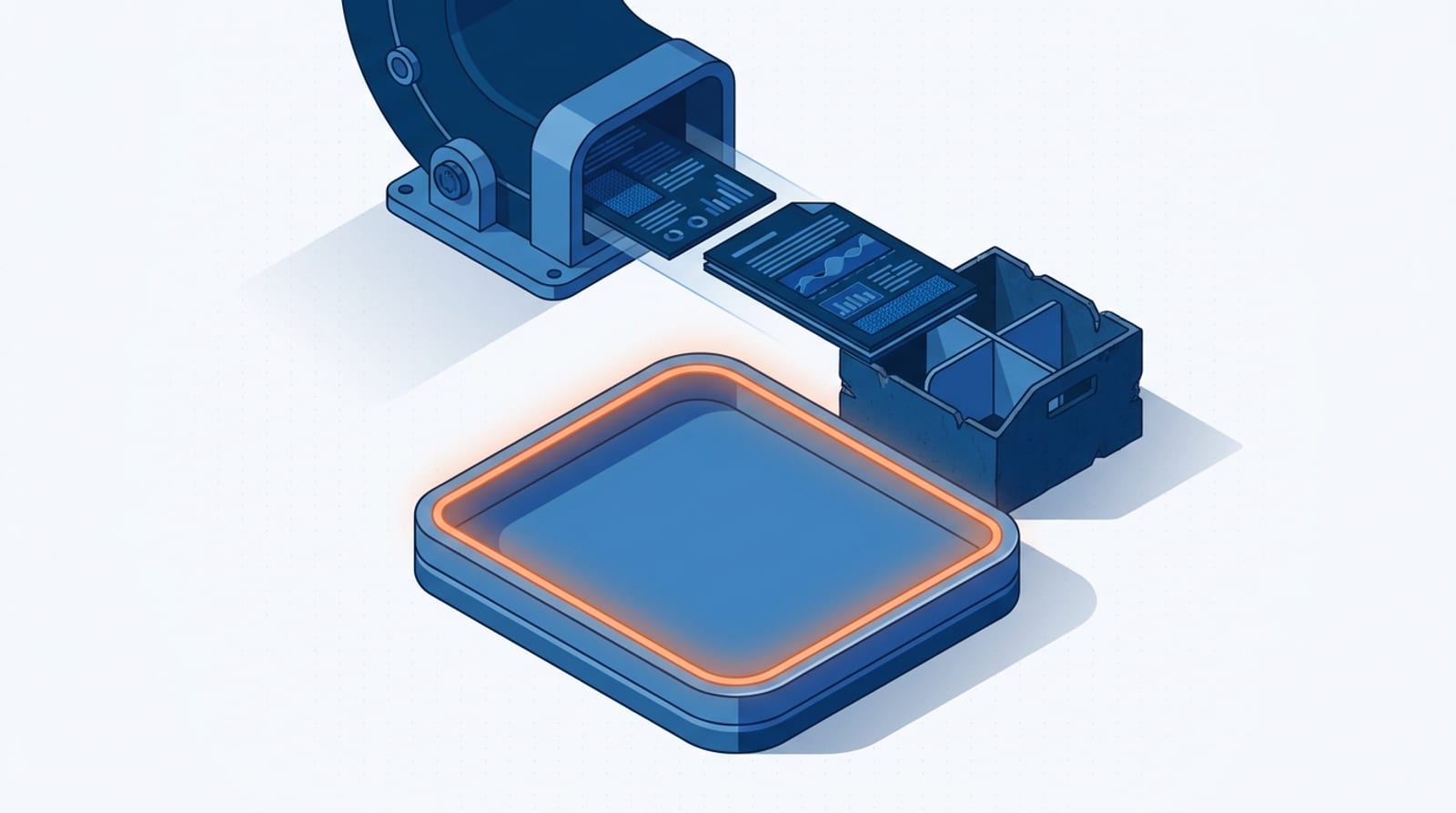
The model did the correct analysis, and then saved the result with the wrong name, or dropped it into a temporary folder, or ended the run without writing anything. Since the grader only counts the file that is in the right place with the exact name requested, correct work was counted as zero.
It is the digital equivalent of solving the whole exam and handing in a blank sheet.
It is worth noting the other result from the same work, because it closes the economic argument: the optimized system matched a model from a newer generation on the main metric at about one seventh of the cost per task, without changing a single weight.
What this unlocks: before discussing the model, look at the runs that failed and classify the reason. If a good share of them failed because of format, path, missing field or nonstandard delivery, the problem is not capability, it is plumbing. And plumbing is fixed with code, which is cheap, inspectable and yours.
What the harness is, without jargon
The harness is everything that is not the model's weights. It is the layer that decides what the model sees, what it can do and when it stops.
- Fixed instructionsWhat the system tells the model before any user request.
- ToolsWhat it can call: search the collection, open a document, write a file, query a system.
- Execution loopHow many attempts it gets, what it does when one fails and when it gives up.
- ChecksWhat is verified before the answer goes out, and what happens when the check fails.
- Delivery contractFormat, name, location and structure of what needs to be produced.
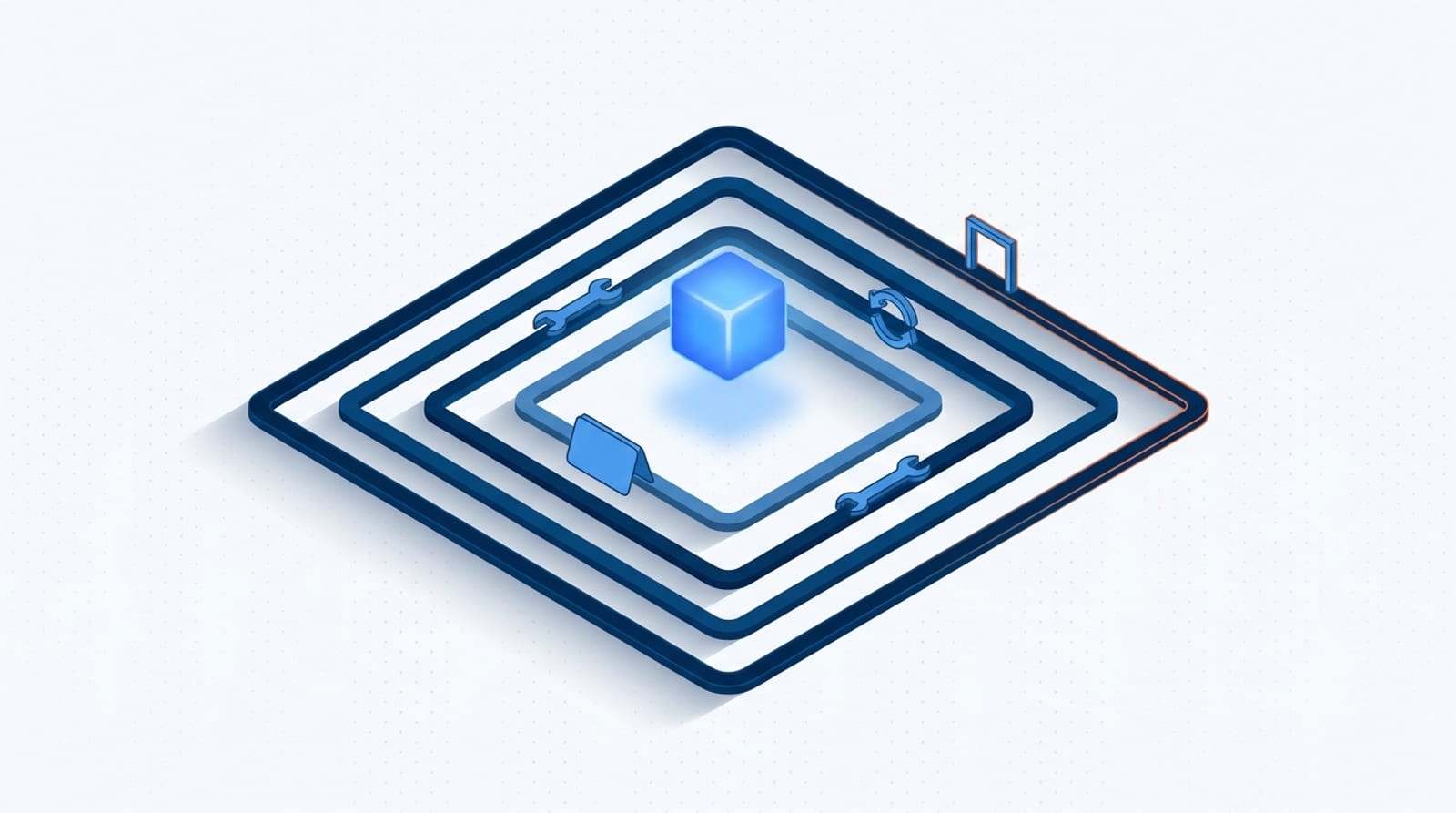
None of these items requires a GPU, none requires training anything, and all of them are readable by a person.
It is the part of the system your company fully controls, and the only one that survives when the base model is replaced next month.
There is no best harness, there is a best pairing
The next temptation is to look for the best harness and adopt it. A study with ten harnesses, two frozen models and 250 coding tasks shows why that does not work.
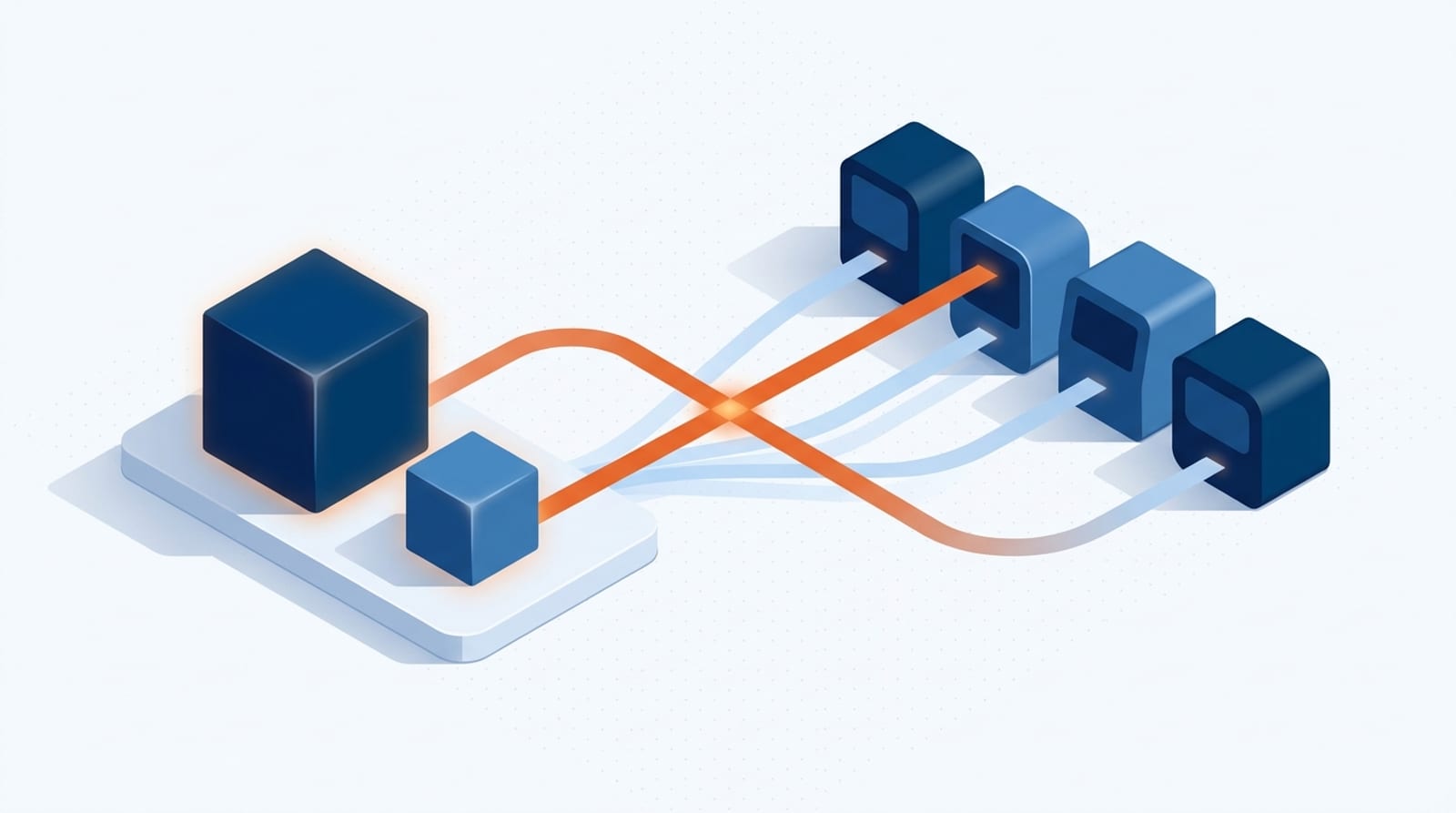
The first model ranged from 23 to 52 in accuracy, depending only on which harness hosted it. The second, much smaller, ranged from 15 to 36.
But the harness that took the first model to the top was not the one that did so for the second, and the cost per task across combinations ranged from about US$ 0.20 to about US$ 20.
This also explains a result that looks absurd at first glance. In a legal work measurement, a popular coding agent running a frontier model scored 24.6 on per-criterion pass rate. The same model, in a simple harness, scored 43.8. The ready-made agent was not worse in the abstract: it carried assumptions from another task, and those assumptions got in the way on this one.
Post-training moves the result, and it has become cheap
The third lever is tuning the model itself with data from your operation. In the same legal measurement, an open model went through three stages:
| Setup | Per-criterion pass rate |
|---|---|
| Open model, custom harness and post-training | 60.1 |
| Open model with custom harness | 46.1 |
| Frontier model in a simple harness | 43.8 |
| Frontier model in a coding agent | 24.6 |
| Open model in a simple harness | 15.1 |
Source: Harvey, update on its post-training effort, August 20, 2026. Per-criterion pass rate, not full task completion.
The first and last rows are the same open model. The distance between 15.1 and 60.1 was built entirely outside the original weights, first with the harness and then with tuning. And the final result surpassed a commercial frontier model.
The cost barrier to doing this has dropped significantly. The talk uses a comparison that it explicitly labels as illustrative and not equivalent: about 7 million GPU hours to train a large model from scratch, against about 7 GPU hours to tune an existing model with your own data. These are models of different sizes and the comparison is not direct, but the order of magnitude of the difference is the point.
Where this changes your project's budget
The financial reading of the three levers flips the order in which most companies spend.
Common order
Starts with the license- Moves up to the most expensive model
- Raises the reasoning effort
- Rewrites prompts by trial and error
- Concludes the technology is not mature
Order the evidence suggests
Starts with measurement- Classifies why the runs failed
- Fixes delivery, format and verification
- Tests model and harness pairings on your task
- Only then considers post-training or a bigger model
One important detail so you do not trade one mistake for another: this is not an argument against choosing the model well, but against treating the model choice as the whole project. The model choice still matters, and there is an adjacent decision that also moves the bill a lot without switching vendors, which is how much the model thinks before answering, covered in How to cut your AI bill in half without switching models.
What to do with this in practice
- Keep the runs that failed and classify the reason before changing anything
- Separate reasoning failures from delivery failures, because they have different fixes
- Write the delivery contract explicitly: format, name, location and required fields
- Measure model and harness pairings together, with cost per task next to the score
- Treat the harness as a company asset: it survives the switch of base model
The last item is the one that pays off most over time. Base models become commodities and are replaced every few months. The system that knows how your task needs to be executed, checked and delivered keeps its value after the switch, and it was built with the knowledge of your operation.
Sources and method
The basis of this article is the talk "Fifty Years of Legal AI", by Dr. Joel Niklaus, presented at the AI & Legal Reasoning Conference at the University of St. Gallen on August 28, 2026, and the works it credits: "Don't Train the Model, Evolve the Harness" (2026), the Meta-Harness paper by Lee et al., the harness optimization study on a set of 250 coding tasks published by Niklaus in 2026, and Harvey's post-training update of August 20, 2026.
The existence and central results of the harness experiment were checked against independent sources during reporting on September 1, 2026, including the authors' public material and the paper's reference code. All numbers here are from third parties and none is an X-Apps measurement. The generic agents and the coding agent appear unnamed because what is under analysis is the system around the model, not the product. Harvey, the only company named in the text, is external to X-Apps, cited as an object of analysis and with no commercial relationship with us.
Frequently asked questions
It is usually the smaller lever. In an experiment with the model frozen and the tasks fixed, changing only the surrounding code took the pass rate from 3.5% to 80.1%. The model was exactly the same at both extremes.
It is everything that is not the model's weights: the fixed instructions, the tools it can call, the trial and error loop, the checks before delivery and the format of the output. It is ordinary code, readable and under your control.
File handling. The model did the correct analysis and saved it with the wrong name, in a temporary folder, or did not save it at all. Since the grader only counts the file in the right place with the requested name, correct work was counted as a failure.
No. In a study with ten harnesses and two frozen models on 250 tasks, the winner for one model was not the winner for the other, and the cost per task ranged from about US$ 0.20 to US$ 20. What exists is the best pairing of model and harness.
Not always. In the legal work measurement cited, a coding agent with a frontier model scored 24.6 on per-criterion pass rate, against 43.8 for the same model in a simple harness. A harness carries assumptions from the task it was built for.
By measuring where tasks fail. Many agent failures are not reasoning, they are delivery: wrong format, file in the wrong place, missing field. This shows up in an afternoon of analyzing real runs and costs code, not GPUs.