Índice do artigofaltam 9 min de leitura
Publishing is the easy part. The project is decided by the limits: how many posts per hour, on which networks comments exist and what happens when the token expires on a Friday night.
A social media publishing API delivers three concrete things: one authentication instead of sixteen, one request format instead of sixteen, and each platform's developer approval process handled by someone else. That third item is usually the deciding one, because it is the only one that cannot be solved with engineering time.
What it does not deliver is uniformity. Each network keeps its own rules, and the unified API exposes them instead of hiding them. This article is about exactly that: what you can do, where the platform blocks you and what to find out before promising volume to anyone.
The numbers come from the public documentation of Zernio, an external Spanish company founded in 2025, with no ownership relationship with X-Apps, used here as a concrete, documented example of the category, not as a purchase recommendation. The business picture that motivates this kind of project is in Social media: the system left out of the integration.
Article summary
- This piece is technical: what the publishing API delivers and where each platform blocks you, in speed, daily cap, comments on only 9 of 16 networks (8 while Reddit remains suspended for third-party apps), tokens and webhooks, for whoever is going to build the integration.
- The speed cap is 25 posts per hour per account, with each network's own daily limit. The tightest is TikTok's, at 15 videos per day for accounts connected through the TikTok for Business app, the path for every new connection; Pinterest comes right after, with 25.
- A valid token is not a sign of a live account. The health endpoint is what detects a dead connection before the client does.
- What turns publishing into integration is the return webhook, and deduplication is the responsibility of whoever receives, not whoever sends.
The connection is OAuth, and that changes who holds the password
The first gain of a publishing API is not technical, it is about access: the account owner authorizes via OAuth and never hands over the password. The authorization can be revoked by them at any time, without changing any credential.
That unlocks an entire commercial case. Agencies, franchisors and software serving multiple clients no longer need to ask for the client's Instagram password, which is one of the objections that most delays the start of this kind of project.
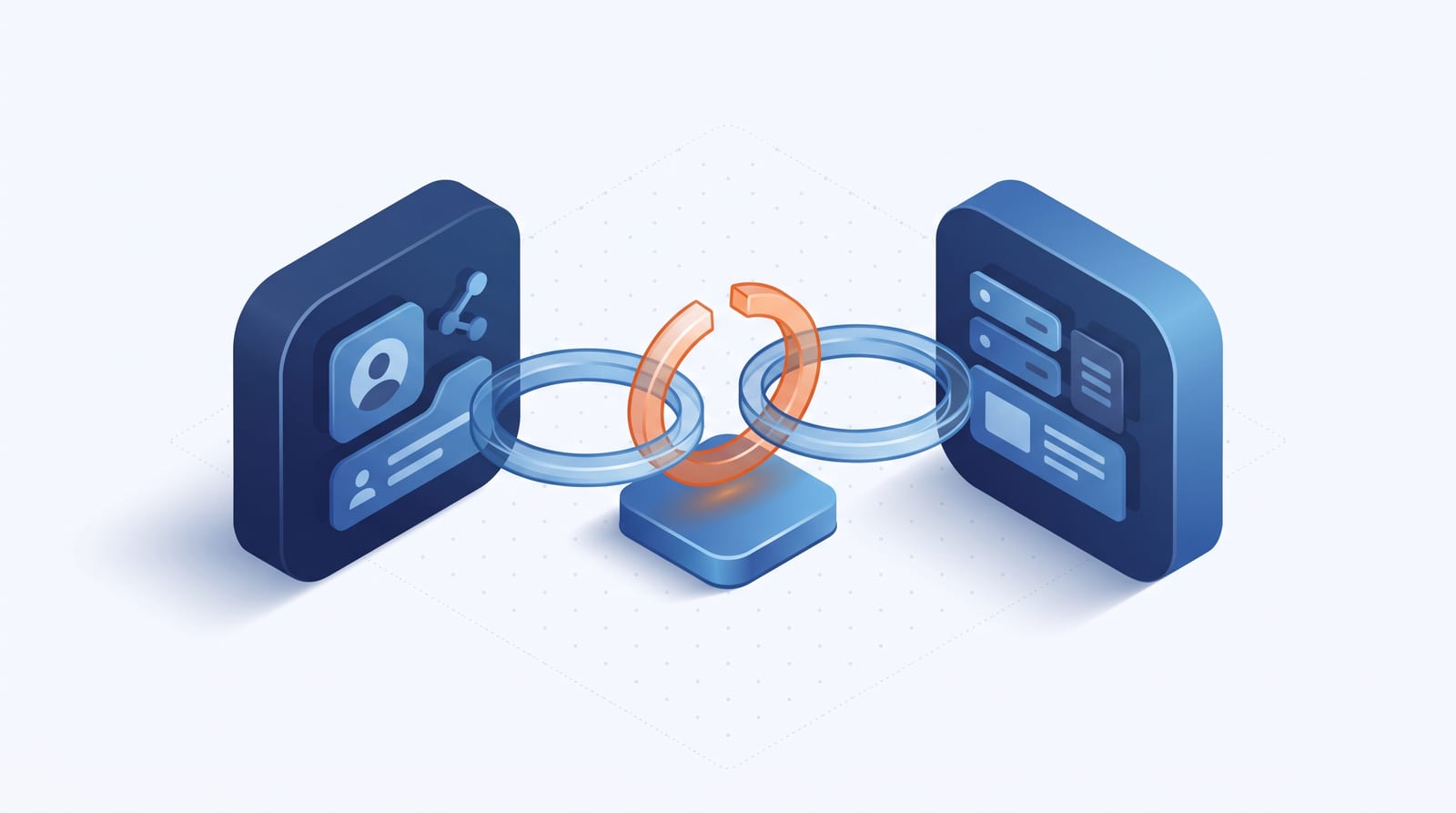
In the structure researched, accounts live inside containers called profiles, and the profile is the isolation boundary between clients. The API key can be restricted to specific profiles, and a call outside its scope is refused with a 403.
Translated into what matters: a bug in your code does not leak one client's account to another, because the limit is not in your code, it is in the credential.
There is also a mode in which you build your own account selection screen, instead of sending the client to the vendor's hosted interface. It is the difference between a product that looks like yours and one that looks resold.
One endpoint, three ways to publish
The simplest part is the one that generates the least discussion, but it is worth noting when sizing the effort: publishing, scheduling and drafts are the same endpoint, differentiated by parameter. With date and time zone, it schedules; with the publish-now flag, it publishes; with neither, it saves as a draft.
- Draft, created with no date and no publish order, useful for an internal approval queue.
- Scheduled, with explicit date and time zone, which is where the classic mistake of publishing at 3 a.m. lives.
- Immediate, for the case triggered by an event in your system, such as a new product in the catalog.
What this unlocks in product terms: the approval queue becomes yours, inside your system, with your own flow of who approves what. Drafts exist precisely so the post stays parked until someone releases it, without depending on the vendor's approval flow.
Where the platform blocks you: speed and daily cap
This is the point that most often sinks project estimates. The speed cap researched is 25 posts per hour per connected account, and each network has its own daily limit. The intermediary enforces these caps so the platform does not restrict or flag the account, and they do not behave the same way: a post that exceeds the hourly cap is held and goes out on its own later, while the daily cap returns a 429 with the wait time in the message.
| Network | Daily cap researched |
|---|---|
| Threads | 250 posts |
| 100 posts | |
| 100 posts | |
| X | 50 posts |
| Other networks | 50 posts |
| 25 posts | |
| TikTok (connection through the TikTok for Business app, the default for every new connection) | 15 videos and 15 photos, in a rolling 24-hour window |
Limits published at docs.zernio.com/rate-limits, read on September 1, 2026 and checked again on November 11, 2026.
TikTok is the behavioral exception: the two counts, video and photo, are separate, and a post that exceeds the cap is not refused with a 429, it is held until a slot opens in the 24-hour window. For whoever is sizing volume, the effect is the same as a refusal, only silent: the queue moves, but at TikTok's pace, and a post scheduled for 10 a.m. may only go out the next day, when the oldest post leaves the 24-hour window.
For video, the bottleneck is TikTok: anyone promising 30 videos a day on a TikTok account connected today is promising twice what will go out, because every new connection goes through the TikTok for Business app and hits the cap of 15. For images, the lowest cap is also TikTok's on those connections, at 15 photos per day; among visual catalog networks, Pinterest is next tightest, with 25. A store with 3,000 products takes about four months on Pinterest alone (3,000 divided by 25 per day is 120 days) and more than six months on TikTok in photos (3,000 divided by 15 is 200 days), if the strategy is to publish everything. The conclusion for the project is not "raise the limit", it is select: publishing the entire catalog on a visual network is a poorly made content decision, and the per-network cap is just charging for that decision.
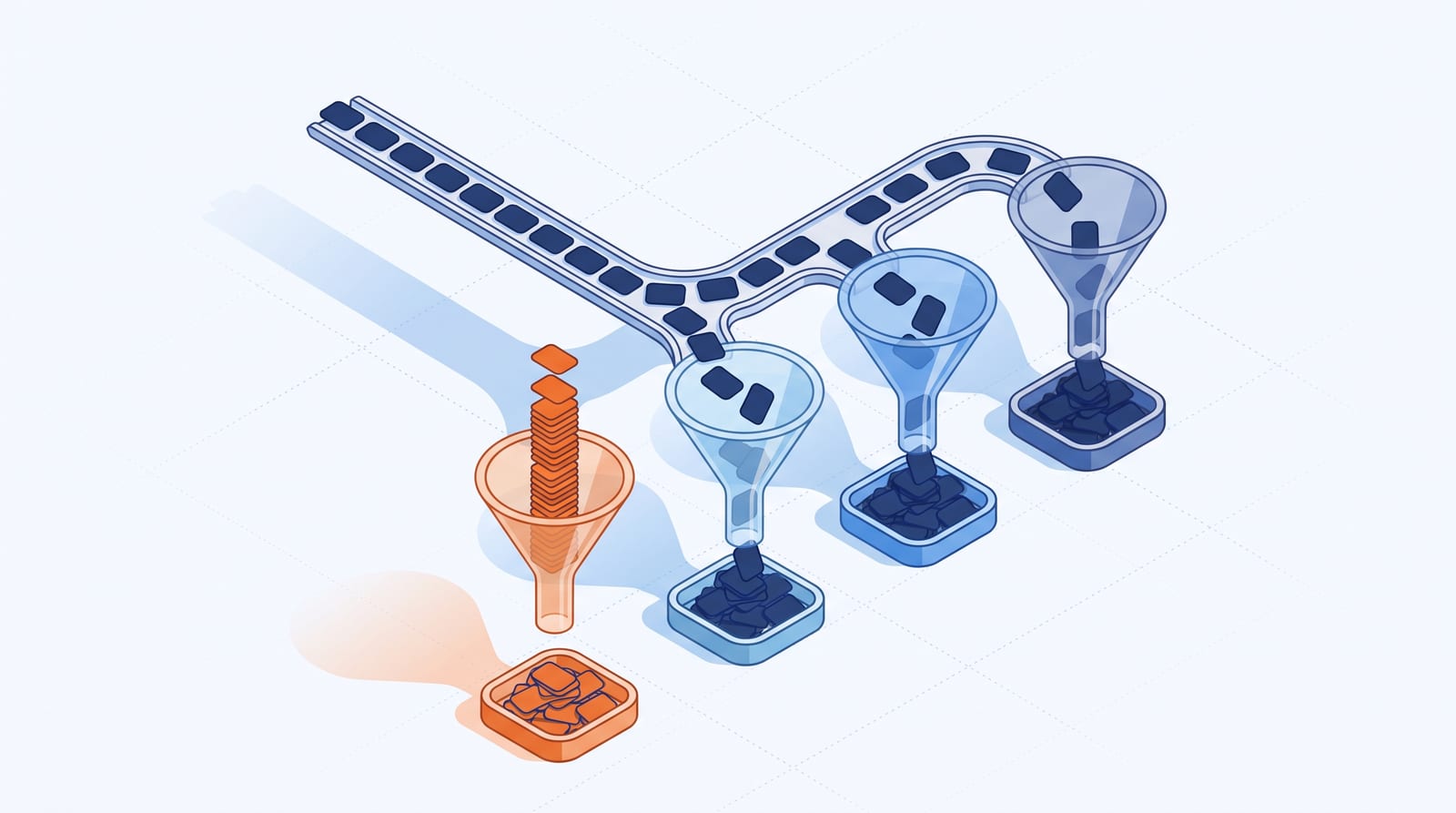
There is a second cap, on requests, that scales with the size of the operation: 60 per minute on the free tier, 600 per minute between 3 and 2,000 connected accounts, and 1,200 above that. Analytics calls have their own one-second window. Every response carries headers with the limit, how much is left and when it resets, and the 429 carries the wait time in the body.
What this unlocks in cost: a client with 400 accounts does not need 400 keys or a limit negotiation. The limit follows growth on its own, which removes a recurring commercial conversation from multi-client operations.
A valid token is not a sign of a live account
This is the operational trap that generates the most support tickets, and it is subtle: the access token can be perfectly valid while the platform refuses to serve the account.
The documented case is WhatsApp, where Meta may refuse to serve the phone number object even with a good token, for example after a disconnection made from the phone. That is why the health endpoint includes a live probe of the link with the platform, separate from the token state: the account shows an error state even with a valid credential.
-
The account publishes normally
Valid token, permissions granted, nothing to do.
-
Someone changes the account from the app
A permission drops or the link with the platform breaks. No alert arrives, because nobody has tried to publish yet.
-
The scheduled campaign fails
A 401 response with a token-expired code. The post does not go out and the queue piles up.
-
The client notices before you do
Only reconnection by the account owner solves it, and that depends on someone on the client side being available.
What this unlocks: a daily sweep of the health endpoint across all accounts turns this incident into a scheduled task. The cost of implementing it is one routine; the cost of not implementing it is finding out from the client.
Webhooks are what turn publishing into integration
Without a return event, a publishing API is just a scheduler you call from code. What makes it an integration is the return: post published, post failed, comment received, message received, account disconnected, ad changed state.
In the offering researched, events are organized by resource group (publishing, engagement, messages, ads and others), and you can turn off in the subscription the groups you do not consume. The signature is HMAC SHA-256 in lowercase hexadecimal over the raw body, using your webhook secret as the key.
The delivery contract is at-least-once, with a 5-second deadline to respond 2xx, up to 7 attempts per event in a cumulative window of about 51 hours, and a dead-letter queue at the end. Each event carries a stable identifier, repeated in a header.
The takeaway for the project is direct: deduplication is yours. The identifier is offered precisely because repeated delivery is expected, not exceptional. A system that stores events without checking the identifier will duplicate leads, duplicate messages in customer service and duplicate rows in reports, and it will do so exactly on peak day, when the network wobbles and retries fire.
The 5-second deadline is also an architecture decision disguised as a detail. It forces your endpoint to only receive, validate the signature, store and respond. Any heavy processing needs to happen later, outside the request cycle.
An endpoint that calls the CRM synchronously before responding is the pattern that produces cascading retries when the CRM slows down.
Posts made from a phone also need to be counted
No team posts only through the API. Someone always publishes a story from their phone, and that post exists for the audience, for the algorithm and for the report.
The offering researched treats this as external publishing, synchronized from outside in at intervals of about 90 minutes per account, with an endpoint to fetch a specific post on demand. That is enough for reports and history, and not enough for a dashboard that promises live state.
What this unlocks in product, and it is the easiest point to get wrong in the promise: the internal dashboard should show the time of the last sync, not pretend to be real time. A correct number with a declared delay builds trust; a correct number presented as instant generates a ticket every time someone posts from their phone and does not see it on screen.
What is charged per call, not per account
The pricing model researched is per connected account, with two free, and it drops by tier as volume grows. Outside it there are usage-based costs that do not appear on the main page, and one of them changes the software design.
X passes on the cost of its own API, with no markup, per call: reading a post at US$ 0.005 per resource, creating content at US$ 0.015 per request, content with a URL at US$ 0.200 per request, reading a direct message at US$ 0.010 and sending one at US$ 0.015. There is a configurable monthly cap, with a warning at 80% and a pause at 100%.
Pass-through prices published at docs.zernio.com/pricing, read on September 1, 2026 and checked on November 11, 2026.
The more-than-tenfold difference between posting with and without a link is the architecture information hidden in the price. An automation that reposts each blog article with the link in the body has one cost per post; the same automation with the link in the first comment has another. It is worth knowing the math before choosing your connector's default format, not after the first invoice.
The full breakdown by operation size is in How much it costs to run 40 client accounts on social media.
Unified layer or direct integration with each network
There is no universal answer, and the choice depends on two variables: how many networks and how deep into each one.
A unified layer pays off when
- There are more than three networks, and maintaining each native API would become ongoing work
- You serve multiple clients and need per-tenant isolation without building it
- Some platform's developer approval process is a real deadline blocker
- The operation includes ads, comments and messages, not just publishing
Direct integration pays off when
- There are one or two networks, and they will not change any time soon
- You need a feature only the native API exposes and the layer does not cover yet
- There is a contractual requirement that no third party sit in the data path
- Volume is high enough for the per-account price to exceed the cost of maintaining the code
There is a middle path that is usually right and almost never considered: use the unified layer for secondary networks and go direct on the network at the center of your business. Nobody needs to pick a single model, and designing the adapter with that possibility in mind costs little at the start and a lot to add later.
On any of the three paths, the piece that does not change is yours: the log of what came in and what went out, with a single vocabulary and your own identifier. That is what turns switching vendors into adapter work instead of a rewrite.
Sources and method
The numbers in this article come from reading Zernio's public documentation on September 1, 2026, reviewed on November 11, 2026, covering the platform matrix, usage limits, webhooks, the data model glossary, account health endpoints and the pricing page. The platform's public changelog was consulted on the first date to gauge its pace of evolution. The November review added TikTok's own cap, the current count of networks with comments and messages, the organization of webhooks by resource group, the Reddit suspension and the on-demand sync endpoint; the other limits, the webhook contract and X's pass-through prices matched the first reading.
Zernio was chosen as a concrete case because it publishes its limits on an open page, without a sales contact, and not because it was compared and won: no vendor comparison was conducted for this article.
Platform prices and limits change frequently, and those in this research are valid for the stated date. None of the numbers were measured in production by X-Apps with this vendor.
Primary sources consulted on September 1 and November 11, 2026: docs.zernio.com (platforms, platform comparison, usage limits, webhooks, pricing, glossary and account endpoints).
Frequently asked questions
Using an intermediary layer, yes: the vendor is the one who goes through the platform's approval process, and you call a single API. Going directly to Meta, you take on the review process and the maintenance of every Graph API change.
In the offering we researched, 25 posts per hour per connected account, with a daily cap that varies by network: 100 on Instagram and Facebook, 250 on Threads, 50 on X, 25 on Pinterest and, on TikTok, 15 videos and 15 photos per day for accounts connected through the TikTok for Business app, which is the path for every new connection, counted in a rolling 24-hour window. The intermediary enforces these caps so the platform does not restrict or flag the account. Read on November 11, 2026.
On 9 of the 16 networks covered by the offering researched, according to the matrix read on November 11, 2026. Direct messages reach 9 of those networks, plus iMessage and SMS, and metrics reading reaches 10 fully plus 2 in limited form. The counts include Reddit, currently suspended for publishing, messaging and metrics because the network blocked third-party apps; the matrix describes what it offers when access returns. Publishing and scheduling is the only capability covered on all 16.
Publishing fails and the account needs to be reconnected by its owner. The error is explicit, with a token-expired code, but it only arrives when someone tries to use the account, so it is worth checking the health endpoint proactively.
It does, with a delay. In the offering researched, automatic synchronization of posts made outside the API runs roughly every 90 minutes per account, and an endpoint fetches a specific post on demand. A dashboard that promises real time will look wrong whenever the team posts from the app.
Direct pays off when you use one or two networks and need features only the native API exposes. The unified layer pays off as the number of networks grows, because the real cost is not the first integration, it is maintaining all of them afterwards.