Índice do artigofaltam 5 min de leitura
In Protheus, saying it "has an API" settles less than it seems. There is the REST server being on, there is the model being published, and there is the field being inside the model. Those are three different questions, with three different people responsible.
In the projects X-Apps delivers, TOTVS Protheus (an ERP system from the Brazilian vendor TOTVS) is the management system that most often sits on the other side of the table when a mid-sized or large company decides to build an app, a customer portal or its own e-commerce. And it is where schedules slip the most, almost always for the same reason: the estimate was made as if access to the data were a programming problem.
This article is for those who will estimate, hire or deliver one of these integrations. It describes where the data can come from, what needs to be turned on on the other side and which questions need to be answered before any date is promised.
Article summary
- There are three ways to get data out of Protheus, and the choice determines who depends on whom for the rest of the project.
- The Protheus REST server depends on configuration in
appserver.ini. Without it there is no endpoint, however much the product documentation describes the feature. - The most common defect is not a connection error: it is a field that exists in the ERP and is not part of the published resource.
- Protheus and Fluig are separate products. Access to one does not imply access to the other, and that is two dependencies on the schedule, not one.
"Having an API" in Protheus is three questions, not one
The sentence that stalls projects is "the client confirmed that Protheus has an API". It mixes three conditions that need to be checked separately, because each one has a different person responsible and a different timeline.
The first is whether the REST service is active in that environment. The second is whether there is a published resource matching the desired data. The third is whether the fields the product needs are inside that resource. It is perfectly possible to have the first two and fail on the third, and that is exactly the most frequent case.
In business terms: each of these three conditions, when missing, is solved by a different person, and none of them is usually on the team building the app. That is why an honest estimate for a Protheus integration always takes the form "X weeks of work, after A, B and C are in place".
The three ways to get the data out
Published model. The Protheus framework lets you publish data models as REST resources, and the address follows a predictable pattern, in the form <protocol>://<server>:<port>/fwmodel/<published model name>/<PK>. Publishing is declared in code, with the instruction PUBLISH MODEL REST NAME <name> SOURCE <source> RESOURCE OBJECT <object>. It is the path most aligned with the product and the one that breaks least on upgrades.
Custom REST. The FWRest class lets you write tailored routes in ADVPL, both to publish and to consume external services. It is the path when the business rule is too specific for the standard model, and the one that depends most on whoever knows the client's environment.
Direct database. Reading the tables without going through the framework is the fastest path of all and the most expensive the following year. You start depending on the internal format of the tables, which is not a public contract, and the support relationship with the ERP vendor changes.
Why it matters: choosing among the three is not a technical preference; it is deciding whom your schedule will depend on for the next few years. The first path depends on the vendor for each new field and is stable. The third depends on no one to get started and breaks on its own at every version upgrade.
The REST server must be on, and that is environment configuration
Before any endpoint responds, the REST service needs to be enabled in the environment. That configuration lives in appserver.ini and involves, among other keys, HTTPJOB to start the service, HTTPREST for socket and authentication configuration, HTTPV11 to enable the REST server and HTTPURI to control the base URL where the services are available.
This is not an implementation detail for those estimating the project: it is an item that is usually the responsibility of the client's infrastructure team or the TOTVS partner that maintains the environment, not of the app team.
The missing field is the most common problem
This is the defect that shows up most in our projects and is least anticipated in proposals. The data is in the ERP, operations staff see it on the Protheus screen every day, and it simply doesn't come back in the API response.
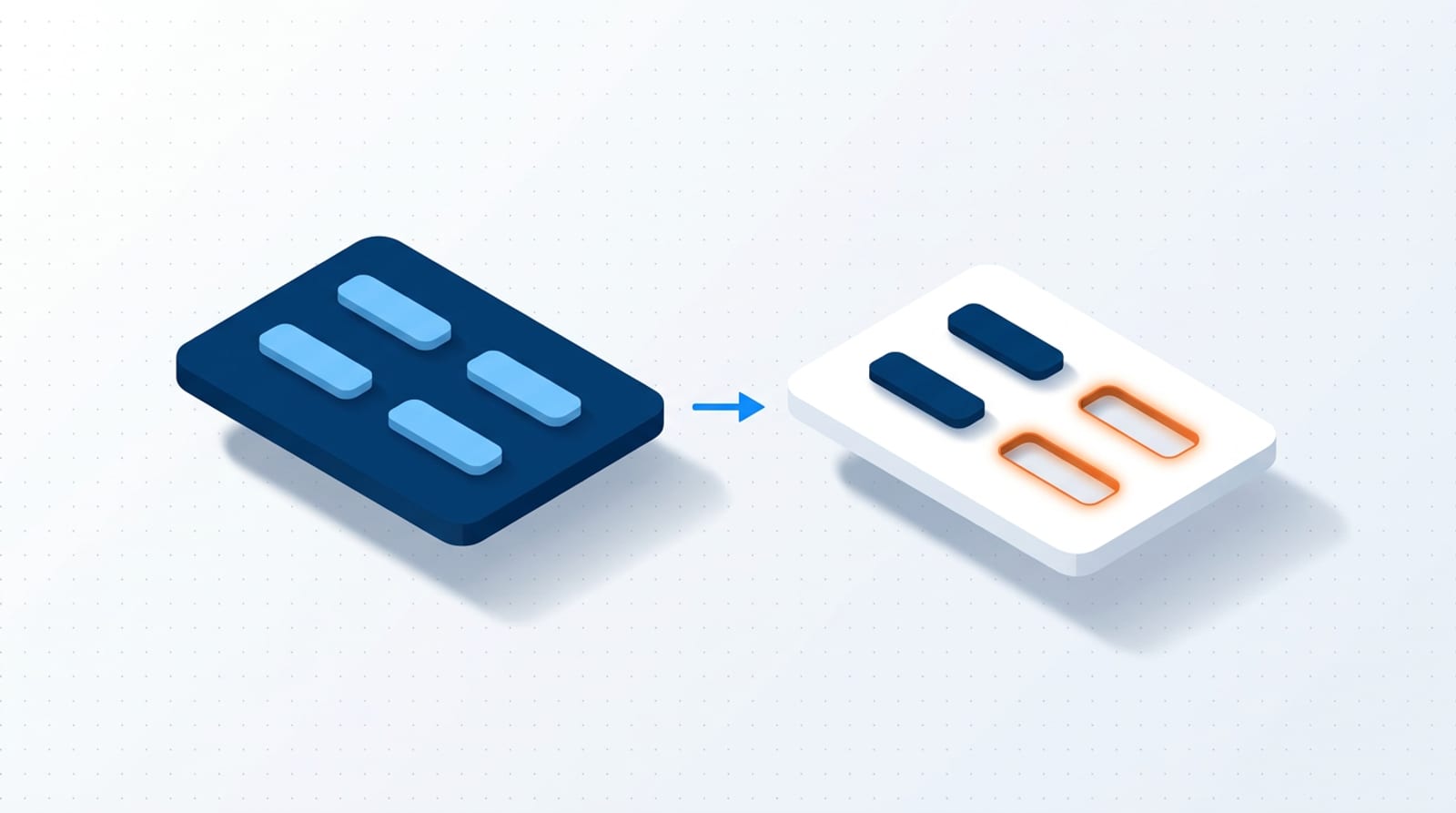
In a customer service app for a tire retail chain, looking up a customer by CPF (Brazil's individual taxpayer ID) did not return customers who were registered in Protheus. In the same project, vehicles with Mercosur-standard license plates (the newer plate format Brazil adopted in 2018) could not be found. Neither was a connection failure.
And when the product also needed the area code (DDD) and date of birth, the person who changed the API to include those fields was whoever maintained the ERP, not the app team.
The practical consequence is just one, and it applies to any Protheus project: the field list must be checked against a real API response before the schedule is closed, not against the documentation and not against the system screen. A test call in the first week avoids renegotiating the deadline in the second month.
- Ask for a real call, in the staging environment, to the resource the product will consume.
- Compare the response with the field list in the data contract, field by field, not by sampling.
- Test your business's edge cases: new document formats, old records, incomplete registrations, accented characters.
- Record who publishes new fields, with name and contact channel, before signing the schedule.
Staging access usually arrives later than agreed
Access to the test environment is the dependency that delays ERP integrations the most, and it is rarely technical.
When Protheus is hosted on the TOTVS cloud, granting users, permissions and ports goes through a ticket flow on the vendor's side. In a cold-chain logistics operation, the team managed to authenticate in Protheus and remained blocked in Fluig, which required its own license file. Two products, two access grants, two timelines.
It is worth treating this as you would any project input: with an expected date, a named owner and a plan in case access doesn't come through in time. Working against a sample database while access is pending is usually better than stopping the team.
Protheus and Fluig solve different things
The distinction matters, because the confusion leads to poorly sized scope. Protheus is where the management data lives: customer records, inventory, finance, invoicing. Fluig is the process and document layer, where approval flows and forms live.
A project that needs to check a customer's balance talks to Protheus. A project that needs to trigger and track an internal approval talks to Fluig. A project that needs both has two integrations, two credentials and two access dependencies, and the budget needs to say so explicitly.
The questions to take to the first technical meeting
This is the list that changes the quality of an estimate. It fits into a one-hour meeting with whoever maintains the ERP, and it answers almost everything that determines the timeline.
- Is the REST service enabled in staging and production, with the same settings?
- Which resources are already published today, and can we see a real response from each one?
- Who publishes a new field, through which channel, and how long did it take the last time it happened?
- Is the environment on-premises or on the TOTVS cloud, and who opens access tickets?
- Is there any customization in the environment that changes the standard behavior of the resources?
The last question is usually the one that yields the most revealing answer. A Protheus environment at a company with years of operation almost always has customizations, and customization is the difference between the product documentation and what that specific server does.
Frequently asked questions
Yes. The Protheus framework offers REST publishing of data models and the FWRest class for custom consumption and publishing in ADVPL. What varies from company to company is whether the service is turned on in the environment and which models have actually been published.
Because the field has to be part of the published resource. Being filled in on the ERP screen does not mean being exposed in the API. Adding a new field usually requires a change on the Protheus side, made by whoever maintains the ERP.
Technically it is usually possible and it is the fastest path in the short term. The cost shows up at version upgrades, when the internal format changes without notice, and in the support relationship with the ERP vendor.
It mainly changes access governance. Granting users, permissions and ports depends on a ticket with TOTVS, and that goes into the project schedule as an external dependency with its own timeline.
No. They are separate products, with their own authentication and access grants. It is common for a team to authenticate in Protheus and remain blocked in Fluig, which needs to be treated as two separate dependencies in the project plan.
It depends less on technical complexity and more on two external dependencies: the time to get access to the staging environment and the time for whoever maintains the ERP to publish any missing field. A deadline promised without those two answers is a guess.
Sources and method
References to the Protheus framework come from the official TOTVS documentation, consulted on August 31, 2026: the FWRestModel page on the TOTVS Developer Network, which describes model publishing and the resource address pattern, and the basic REST configuration material from the TOTVS Service Center, which describes the appserver.ini keys.
The cases cited come from integrations delivered by the X-Apps team between 2023 and 2026 and were anonymized, since the relationship between these clients and the system is not public. TOTVS prices, call limits and service levels were not researched and therefore do not appear in the text.