
Índice do artigofaltam 9 min de leitura
The board asks which campaign brought in this month's sales. The dashboard answers how many conversations started. These are different questions, and the second one is useless for budget decisions.
Ads that open a WhatsApp conversation have become the most common paid entry point in Brazil, and they have a structural measurement flaw: the sale happens inside the conversation, which is precisely the place Meta cannot see. The ad delivers the click, the conversation happens, the deal closes, and none of it gets back to whoever decides where to put the budget.
The result is something every media buyer knows: optimizing for cost per conversation started. It is the wrong metric, and it rewards the creative that attracts the curious instead of the one that attracts buyers.
There is a way to close this loop, and it is documented. What follows was researched in the complete public documentation of Zernio, an independent Spanish company founded in 2025 with no ownership ties to X-Apps, and checked against the literal text of the source. The event rules, the naming and the attribution window for sends by customer data are Meta's and apply to any official path.
Article summary
- Meta attaches a click identifier to the first message of the conversation, and as a rule only to that one. Miss the capture and you lose attribution for that customer.
- Sending the conversion back uses a path specific to messaging, different from the one used for website events.
- The accepted events come from a closed list from Meta, and the standard pixel name everyone uses on the web is rejected here.
- Treat seven days from the click as a safe margin. Slow follow-up does not lose the sale, but it may lose its attribution.
Today the campaign ends at the click
The funnel of an ad that opens a conversation has four steps and Meta only sees the first two. It knows there was a click and it knows a conversation started, because that happens on its surface. What comes next is blind.
This has two consequences that cost money. The first is about reading the data: the report shows volume, not return, and a campaign that is cheap per conversation may be the most expensive per sale. The second is more serious and automatic: Meta's algorithm optimizes delivery toward the goal it can measure. If it only measures conversations started, it will look for people who start conversations, not people who buy.
The click identifier arrives attached to the first message
The piece that closes the loop already exists and is delivered for free. When someone reaches the company's WhatsApp through an ad, Meta attaches a referral object to the first inbound message of the conversation, containing the click identifier.
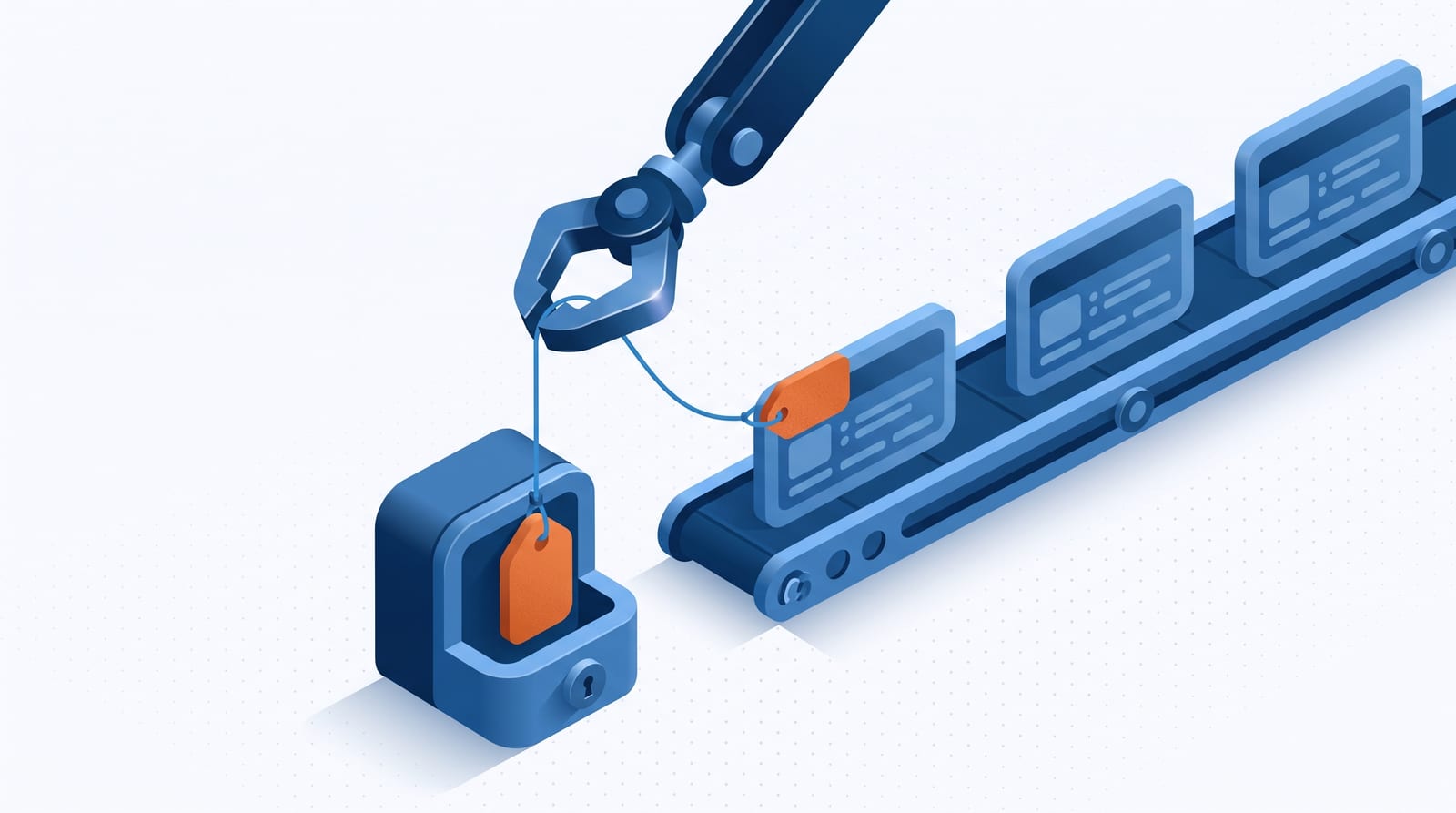
Along with the identifier come the capture time, the source identifier, the source URL, the ad headline and the source type. In practice, the sales team starts to see, right in the conversation, which creative brought in that customer.
The capture is a one-shot event: once recorded, subsequent messages from the same user never overwrite it, because Meta only emits the referral in the first message after the click.
This one-shot detail is what makes the capture an architecture requirement and not a report you can build later. If the system was not listening when the first message arrived, that customer has no source. There is no way to recover it retroactively.
Zernio's documentation, reviewed on November 11, 2026, records a narrow exception: in a minority of clicks, more common with ads shown in WhatsApp Status, Meta itself does not send the identifier. In that case, Meta's automatic event detection may later detect a lead or a purchase in the conversation and deliver the identifier along with it. The exception covers Meta's failure, not your system's.
Sending the conversion back is its own path, not the website one
The missing part is the return trip: telling Meta what happened inside the conversation. This uses a path specific to messaging, with its own source tag, and it is different from the website event mechanism most teams already know.
Confusing the two is the most common configuration mistake, because the media team has been operating the website path for years and assumes it is the same.
The middle step is the one that requires real work, and it is not technical: someone needs to define at what point a conversation becomes a qualified lead and at what point it becomes a sale. As long as that is each salesperson's opinion, there is nothing to send.
A closed list of events, and the name that fails silently
The list of events accepted in conversations is different from the list of website events, and that forces you to map your sales funnel onto these milestones before starting.
When this article came out, in September, Zernio's documentation listed five events. On November 11, 2026, Meta's page for messaging conversions lists 14, and Zernio's documentation now lists nine of them: the five it tested live against version 25.0 of Meta's API plus qualified lead, order created, order canceled and order returned, taken from Meta's list.
| Event (name in Meta's API) | When to use | On Zernio's list |
|---|---|---|
| Lead submitted (LeadSubmitted) | Form filled in, contact captured | Yes |
| Qualified lead (QualifiedLead) | The team qualified the lead | Yes |
| Purchase (Purchase) | Payment confirmed or invoice issued | Yes |
| Add to cart (AddToCart) | Customer added an item inside the conversation | Yes |
| Initiate checkout (InitiateCheckout) | Customer started closing the deal | Yes |
| View content (ViewContent) | Customer viewed a specific product or service | Yes |
| Order created, canceled or returned (OrderCreated, OrderCanceled, OrderReturned) | Order created, canceled or returned | Yes |
| Order shipped or delivered (OrderShipped, OrderDelivered) | Order dispatched or received by the customer | No |
| Cart abandoned (CartAbandoned) | Customer left the cart in the conversation | No |
| Rating and review (RatingProvided, ReviewProvided) | Customer gave a rating or wrote a review | No |
Event list at developers.facebook.com, Conversions API for Business Messaging page, checked on November 11, 2026. The selection Zernio accepts is at docs.zernio.com, on the same date: the rows marked "No" are on Meta's list but not in Zernio's documentation, so anyone integrating through it should check with the vendor before mapping those stages. Meta notes that these events should represent only interactions inside the conversation, not conversions from other channels, such as the website.
For consultative sales, the core remains small: lead submitted, qualified lead and purchase cover almost everything. The inclusion of qualified lead, absent from the previous version of this text, fills a gap: previously, qualification had to fit into the lead event. The exercise of fitting the funnel into these milestones is often more useful than the measurement itself, because it forces the team to agree on what counts as a lead.
Seven days as a margin, and what that window demands from the sales team
Zernio's documentation applies the seven-day window from the click to sends with the identifier: after that, the event is still accepted, but it is not attributed to the campaign.
Meta's current page, checked on November 11, 2026, differs on this point. It sets the seven days for sends that match the event by hashed customer data, and says sends with the click identifier are not subject to that limit. The same page does not publish another window for the identifier path. Until Meta sets that number, the prudent approach is to treat seven days as a safe margin and check in Events Manager what actually gets attributed.
This is more than a technical parameter. It is a yardstick that marketing has just installed inside the sales operation: a sale logged late risks disappearing from the campaign report, even though it came from it. In a short sales cycle, it is irrelevant. In a consultative cycle, it changes the whole reading and needs to be explained to the board before the first report comes out, not after.
The honest way out is not to force the team to close faster. It is to separate two numbers on the dashboard: what Meta can attribute, which serves to optimize the campaign, and what the CRM knows, which serves to measure the real return. They will never match, and presenting both avoids the unproductive discussion about which one is wrong.
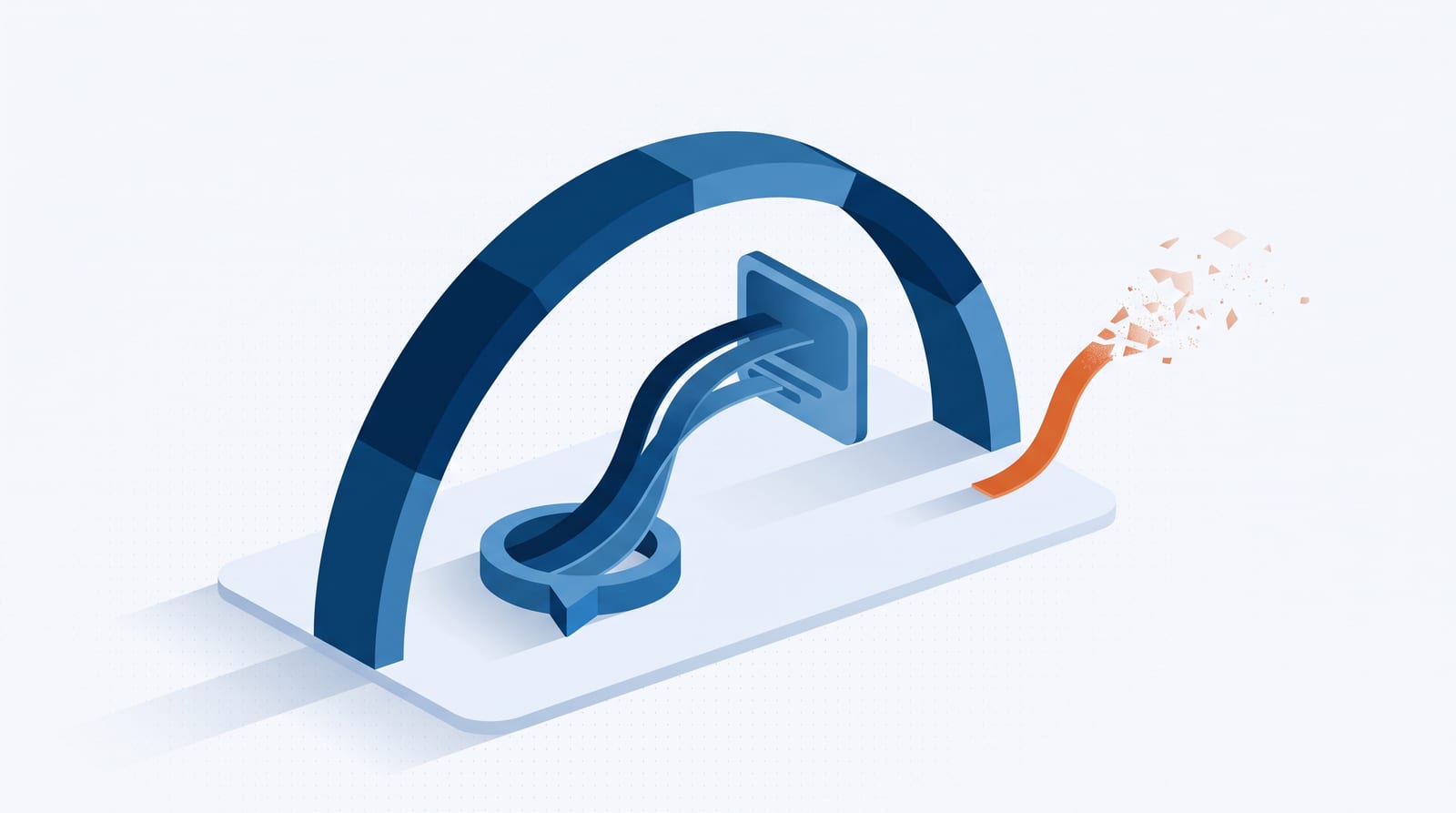
The most common presentation mistake is showing only the attributed number and letting the board conclude that the campaign yields less than it does.
The attributed number is an optimization tool, not the measure of return. It tends to fall below the truth in long-cycle operations, especially when the sale is logged late or matched only by customer data.
What needs to be ready before the first conversion goes out
This is the part that delays the project, and none of it is code. These are administrative dependencies in the Meta account, almost always on the client's side.
- The Facebook page paired with a verified WhatsApp number, without which Meta rejects the ad set with a specific error code
- Business verification completed at Meta, which is the most common cause of rejection when provisioning the dataset
- A conversion dataset provisioned for that WhatsApp account, and only one per account
- The dataset in the same business manager as the WhatsApp account, because one's token cannot reach the other's
- When connecting with your own credentials, the manage events scope included in the token, which is not added automatically
The fourth item deserves attention because it is the one that shows up late: a company that already has a dataset in another business manager cannot simply point to it. Meta rejects it, and the way out is to share the dataset with the right business or use one that is already there.
Test mode, and why it is not optional
There is a parameter that routes events to a test tab in Events Manager, without polluting production data.
This seems like a detail and it is not. Once wrong events enter the production dataset, they take part in optimization: the algorithm starts looking for profiles similar to the ones you tagged by mistake. There is no clean way to erase that. Validating the entire measurement in test mode before turning it on is the difference between fixing a mistake and living with it for a campaign cycle.
The conversions log is not your audit trail
You can list recently sent events, with time, event name, source conversation, how many Meta received and how many failed, plus Meta's trace identifier to cross-reference in its dashboard.
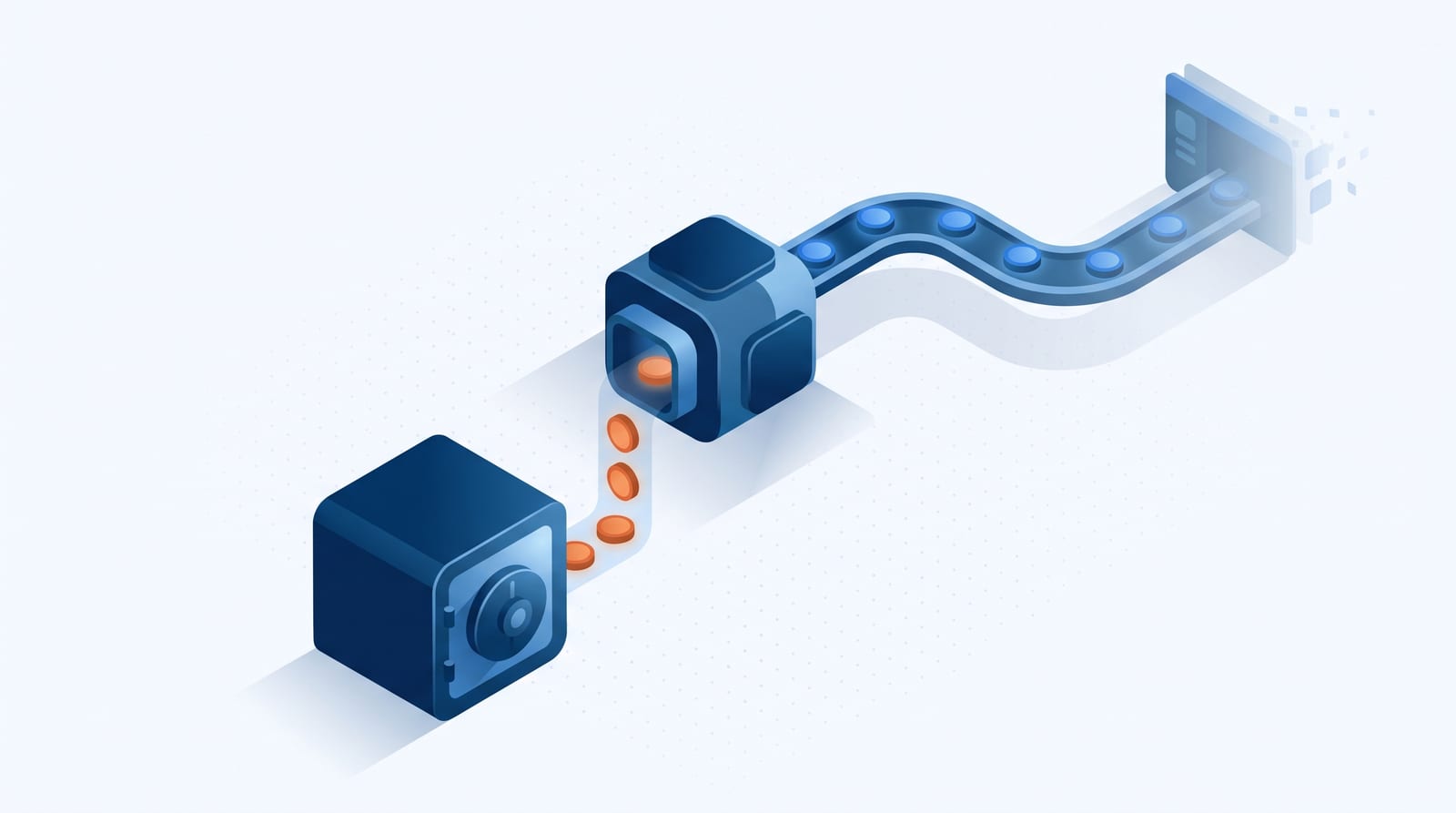
The point to watch is that this list comes from a delivery log, not from event storage, so the window is limited by log retention, on the order of 30 days. For anything that needs to survive a month-end reconciliation, the record has to be yours, written at the moment the event is sent. It is the same rule that applies to the rest of the integration: what came in and what went out stay on your side.
Local ads: radius, city and postal code
A detail that opens up an entire use case for chains with several locations: the ad accepts full geographic targeting, not just country. You can target cities with a radius in kilometers, regions, CEPs (Brazilian postal codes) and metropolitan areas.
This enables a design a store chain normally cannot achieve: a campaign per location, opening a conversation with that location's store number, with the ad source already recorded in the conversation. The per-store report comes from the same mechanism, without spreadsheets.
There is one configuration rule that saves an afternoon: you cannot combine a city with the country that contains it, because the platform rejects the overlap.
Where to start
- Resolve the account dependencies, which are administrative and depend on the client, before writing any code.
- Turn on the capture first, on its own. Storing the source of each conversation already improves the sales report, even without sending anything back to Meta.
- Agree on the milestones with the sales team: what a qualified lead is and what a sale is, mapped onto a few events from Meta's list.
- Validate in test mode until the numbers match the CRM, without touching the production dataset.
- Turn on production and present two numbers from the first report: the attributed one and the CRM one.
The second step is the one that pays off most and is remembered least. Capturing the source without sending back any conversion already answers the question the board asks, because the match with the sale can happen in your own dashboard. Sending data back to Meta serves another purpose: making the campaign's delivery improve on its own.
Sources and method
The facts in this article come from Zernio's complete public documentation, downloaded in full text and checked against the literal text on September 1, 2026 and again on November 11, 2026. In the November review, the list of events and the attribution window were also checked on Meta's page for the Conversions API for messaging. This includes the capture of the click identifier and the fields that come with it, dataset provisioning, the list of accepted events, the rejected names, the attribution window, test mode and the retention of the sends log.
Zernio appears as a concrete case because it documents this mechanism in open text, which allows independent verification. It is not a purchase recommendation, and no vendor comparison was conducted for this article.
The restrictions described are Meta's and apply to any official path: the closed list of events, the rejected names, the seven-day window for sends matched by hashed customer data, and the requirement of a paired page and business verification. The list documented by Zernio has already changed since the first version of this text, which recorded five events, and Meta's may change too, so check Meta's page before mapping your funnel. No number in this text comes from a campaign run by X-Apps with this vendor.
Primary sources: docs.zernio.com, complete documentation (Click-to-WhatsApp Ads, attribution, conversion dataset and message ads), consulted on September 1 and November 11, 2026; developers.facebook.com, Conversions API for Business Messaging, consulted on November 11, 2026.
Frequently asked questions
It is a Meta ad that, when tapped, opens a conversation in the company's WhatsApp instead of taking the user to a website. In Brazil it is one of the main entry points for paid conversations.
Because the sale happens inside the conversation, in a place Meta cannot see. Unless someone sends that information back, the platform can only count clicks and conversations started.
It attaches a click identifier to the first message the customer sends after tapping the ad. That identifier needs to be captured and stored, because Meta only sends it in the first message. There is an exception that applies to a minority of clicks: when Meta itself fails to send it, it may deliver it later if it detects a lead or a purchase in the conversation on its own.
Only those on a closed list from Meta. On November 11, 2026, its documentation listed 14 names, including lead submitted, qualified lead, purchase, add to cart, initiate checkout, view content and the order stages. The standard pixel names used on the web, such as the lead one, do not apply here and are rejected.
Zernio's documentation applies seven days from the click to sends with the identifier as well. Meta's current page sets seven days for sends matched by hashed customer data and says sends with the click identifier are not subject to that limit. In practice, treat seven days as a safe margin and log the event right after the commercial milestone.
The Facebook page paired with a verified WhatsApp number, the WhatsApp account with business verification completed at Meta, and a conversion dataset provisioned for that account.
Yes, as long as the dataset is in the same business manager as the WhatsApp account. A token from one WhatsApp account cannot send events to a dataset in another business.


